10 Things You Didn’t Know You Could Do With Your School’s Digital Archive
Summary: Digital archives in education are no longer just places to store the past. When used strategically, they become active tools for communication, engagement and belonging. From creating instant videos and personalised alumni content to powering admissions storytelling, capturing student voices and informing strategy through analytics, this article explores ten ways modern digital archives can support the everyday work of schools, colleges and universities.
Most schools, colleges and universities think of their digital archive as a storage space… a reliable vault of photographs, documents, publications and memories. A place where history is kept safe.
But today’s digital archives are not simply storage systems.
They’re dynamic, creative, interactive platforms that help you engage your entire community.
When used well, your archive becomes a content engine, a storytelling platform, a learning tool, and a powerful driver of belonging.
Here are 10 things you probably didn’t know you could do with your digital archive:
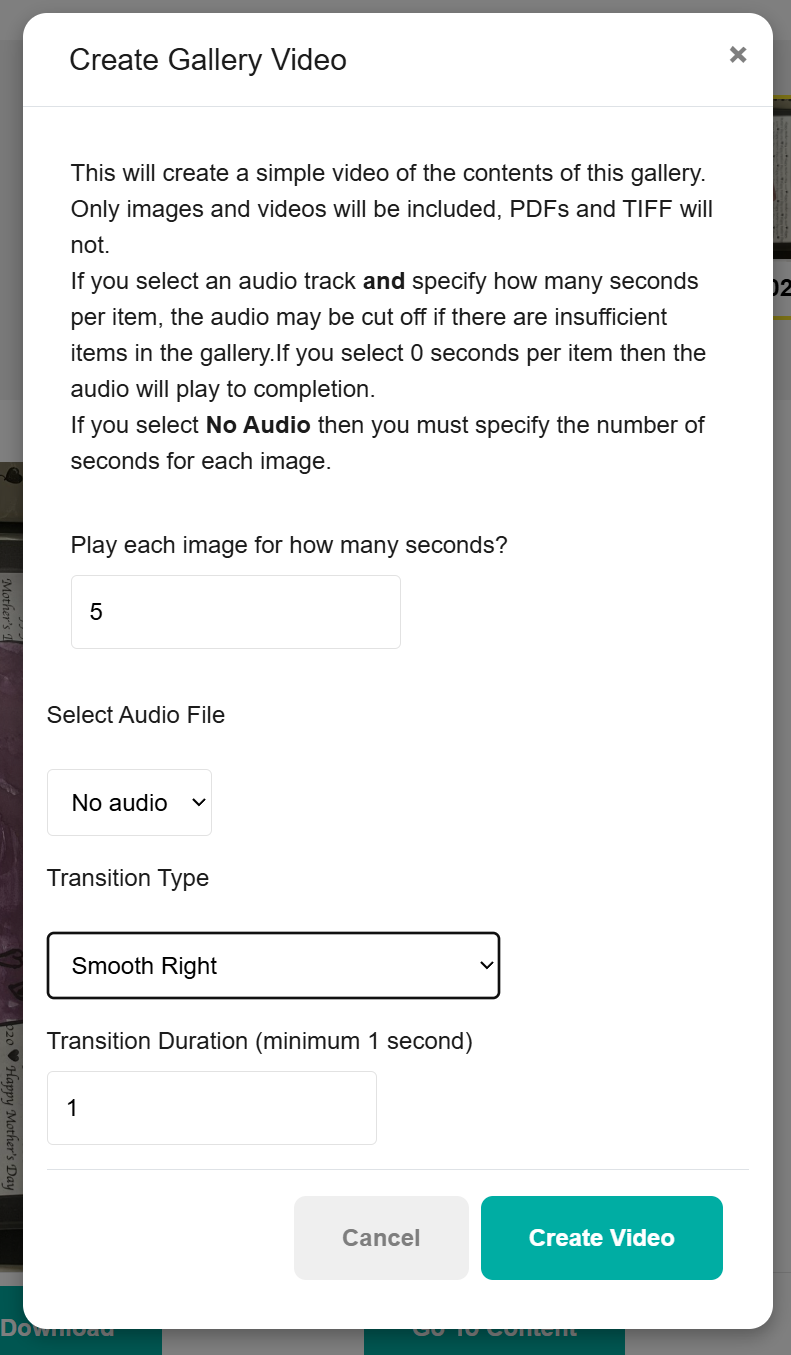
1. Turn Historical Assets Into Instant Videos
Creating video used to require technical skills, editing software and lots of time. Not anymore.
With modern digital archive tools, you can turn existing archive content into short-form videos in minutes.
Create:
Founder’s Day nostalgia reels
“Then & Now” transformations
Quick alumni success stories
Event intros or celebration clips
Memorial tributes or staff retirement montages
All from assets already in your archive, no production team needed.
2. Share Stories Directly to Social Media And Even Schedule Them
Your archive shouldn’t sit quietly in the background.
It should power your content.
With direct-to-social tools, you can:
Publish photos, stories and videos straight from the archive
Create posts for Facebook, Instagram or LinkedIn.
Schedule posts for future dates
Build themed content weeks from existing materials
For alumni teams, this means a steady stream of nostalgia-rich content.
For marketing teams, it means consistent storytelling without last-minute scrambles.
For archivists, it means their work gets seen and appreciated.
Your archive becomes a real-time publishing engine, supporting the work you are already doing.
3. Use Facial Recognition to Reconnect People With Their Past
If you’ve ever opened a folder of old photos and thought, “Who are these people?”, facial recognition is a breakthrough.
Modern archives can now:
Detect and tag faces across decades of images
Suggest identities
Help alumni find themselves instantly
Support consent workflows
Reveal stories hidden in unlabelled photos
At reunion time, this becomes incredibly powerful.
Imagine emailing each attendee a personalised gallery of photos they appear in and documents they are mentioned in, generated instantly.
But facial recognition isn’t just about including people, it also helps with excluding them when needed.
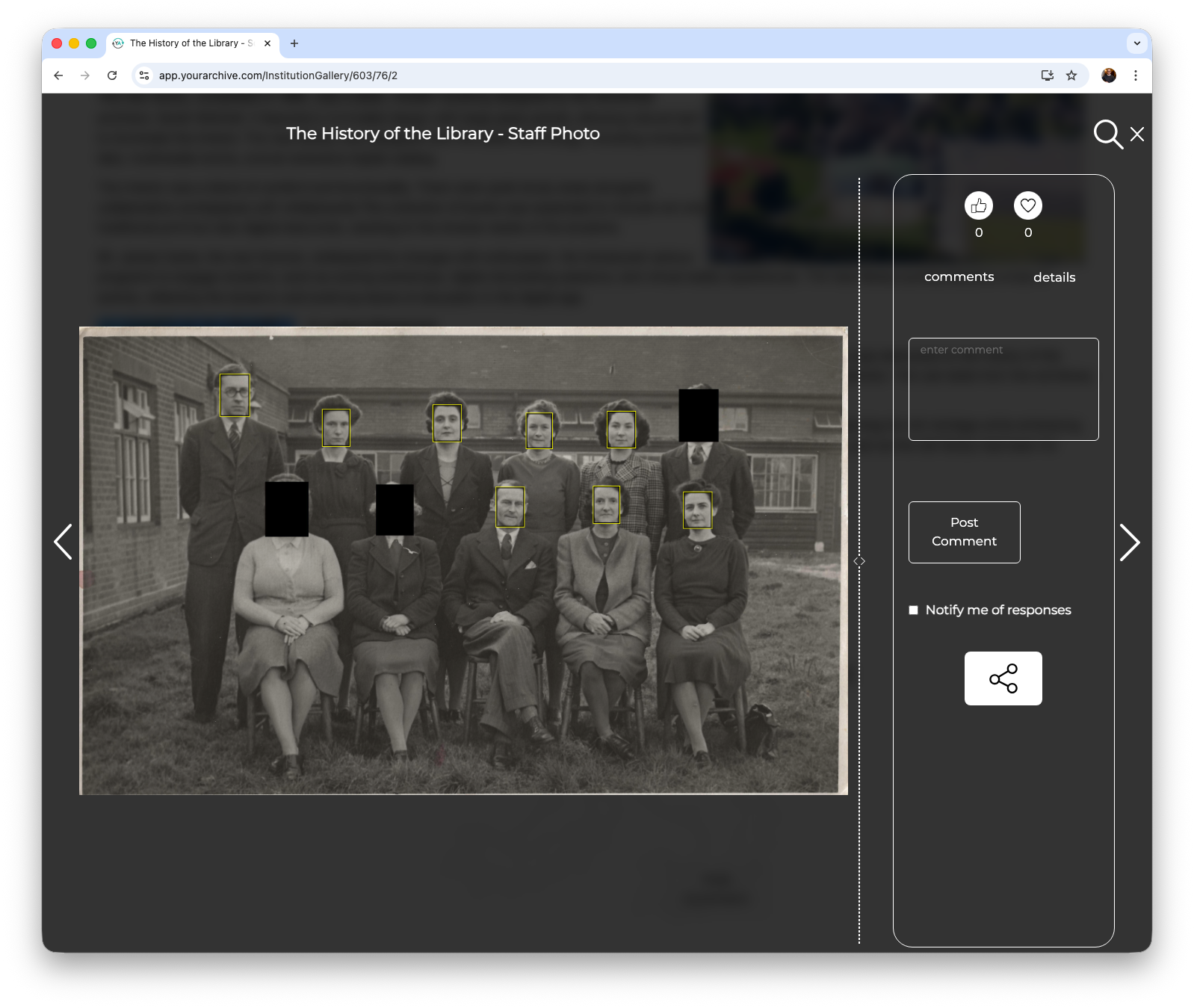
Redaction
If an individual requests not to appear within the archive (or only in certain contexts), the system can:
Detect all images containing that person
Automatically blur or hide their face
Apply this redaction across the entire archive
Redact any written references to them in print
Continue honouring that preference for any new images added in the future
In other words, you only need to process the redaction once.
The archive does the rest.
This keeps your archive safe, respectful, consent-driven, and far easier to manage.
4. Build Instant “Person Profiles” With All Related Content
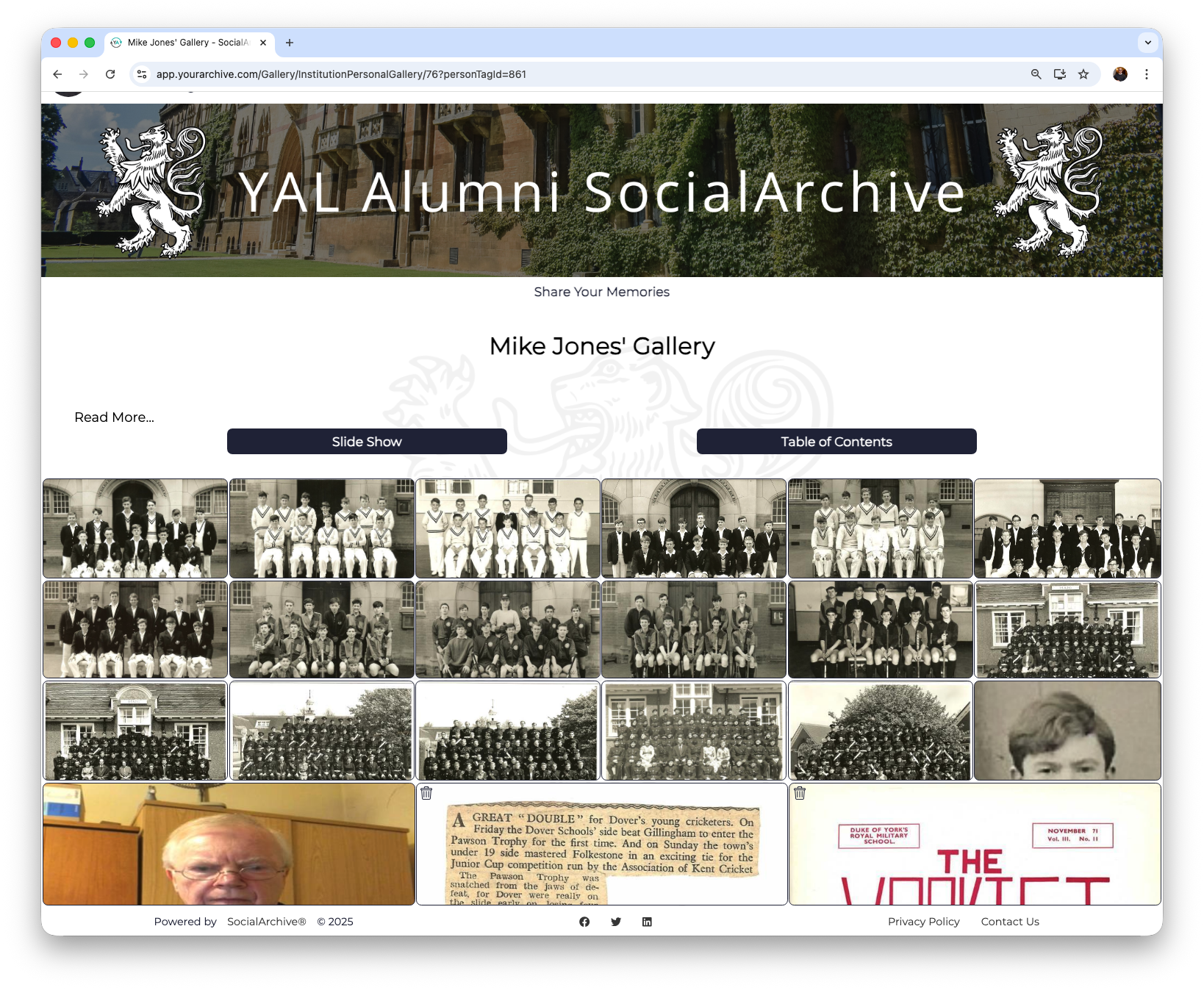
Instead of endlessly searching, you can now click a name and instantly generate a complete visual profile of a person’s history within your archive.
This includes:
Photos they appear in
Mentions in documents or publications
Audio or video interviews
Perfect for:
Notable alumni
Long-serving staff
Memorial features
Reunion spotlights
Student leadership histories
It brings individuals to life and turns scattered assets into a coherent, meaningful story with a single click.
5. Adhere to Your Metadata Standards Without Needing to Be Technical
Metadata matters but it shouldn’t be intimidating.
A modern archive can:
Offer simple, user-friendly customisable metadata fields for everyday contributors
Support advanced schemas like DublinCore, EAD, MODS, METS (if required)
Ensure consistent structure across thousands of items
This provides archivists the control and compliance they need, while making the experience simple for non-technical users.
6. Build Entire Digital Experiences Not Just Collections
Your archive can become a place visitors explore, not just browse.

Create:
Virtual exhibitions
Curated galleries
Reunion-year galleries
Virtual tours enriched with archival material
Themed collections tied to events or seasons
Imagine a “Voices from the 1990s” digital exhibition…
Or “125 Years of School Life”…
Or “Women Who Shaped Our History”.
Your archive becomes a destination, not just a repository.
7. Capture New Content, Including Video Stories
Today’s archives help capture the present as well as preserve the past.
You can now:
Capture testimonials from alumni, staff, parents and students
Record oral histories directly into the system
Invite the community to upload photos or memories
Run memory-collection campaigns for anniversaries
Capture leaving-year reflections from students
Your archive becomes a living, growing historical record, enriched organically by your community.
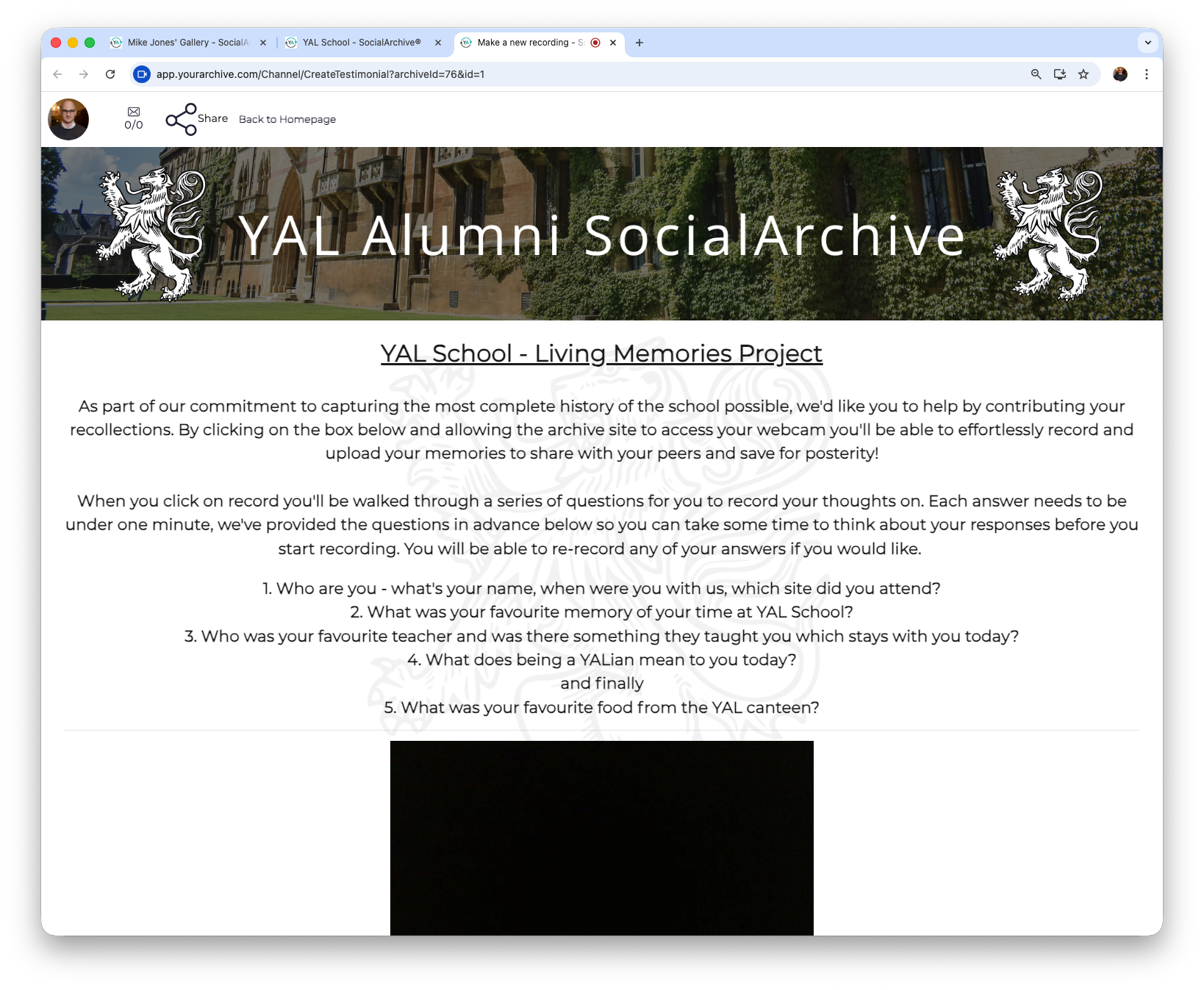
An example ‘Living Memories Project.’ In this example, the platform guides contributurs through 5 questions that respondants can record (video or audio) from their phone or laptop (from anywhere). These are then automatically catelogued, tagged and transcribed.
8. Use Data & Analytics to Understand What Your Community Cares About
Your archive can tell you more than you think.
Analytics allow you to see:
Which items are viewed the most
What decades or themes attract the most attention
Which stories resonate most deeply and with whom
Which types of content drive engagement
Who your most active audiences are
This data can then inform future strategies going forward.
9. Allow Commentary, Context and Community Input Around Your Content
Archives become richer when people can add their stories.
You can:
Attach curator notes or context
Add captions, explanations and background
Invite community contributions (“I remember this day!”)
Enable identification of people or places
Notify community members when new comments are added
Enrich collections over time with shared memory
A simple photo becomes a story.
A collection becomes a conversation.
10. Tailor Your Archive for Different Audiences by Controlling Who Sees What
Not every visitor needs the same experience, and now they don’t.
You can customise the archive for:
Parents
Showcase what’s happening now - student life, activity, community.
Alumni
Highlight content from their years, personalised galleries, memories.
Prospective families
Curate a polished, admissions-friendly view of heritage and identity.
Researchers
Provide deeper historical access and metadata detail.
Internal teams
Offer practical working archives or media libraries.
This means your archive always feels relevant to whoever is exploring it without compromising privacy, consent, or structure.
A Modern Archive Works in the Present, Not Just the Past
Today’s archive is no longer a passive reference library.
It’s a working resource that supports real, everyday activity across your organisation.
From shaping communications to strengthening alumni engagement and informing strategy, your archive has a role in the decisions you make now.
The more you integrate it into your work, the more value it delivers.
About SocialArchive
SocialArchive helps schools, colleges and universities transform their historical materials into engaging digital experiences. With tools for video creation, facial recognition, personalised profiles, advanced metadata, analytics, community contribution and seamless social sharing, SocialArchive makes archives more accessible, more powerful and more engaging than ever. Contact us today or book a short demonstration to find out more.
Key Takeaways:
A digital archive can function as a content engine, not just a record store
Existing assets can be turned into videos, campaigns and celebrations in minutes
Facial recognition enables personalised alumni experiences while supporting consent
Person profiles help tell richer stories about alumni, staff and students
Metadata can remain compliant without being complex for contributors
Archives can host virtual exhibitions, reunion content and milestone showcases
Schools can actively capture student and alumni voices, not just preserve history
Analytics reveal what content different audiences care about most
Community commentary transforms static items into shared stories
Archives can be tailored to different audiences without compromising privacy
FAQs:
How is a digital archive useful beyond preservation in education?
Modern digital archives support communications, alumni engagement, admissions storytelling, learning and strategic decision-making — not just historical storage.
Can schools really create video content from archive materials?
Yes. Schools can quickly create videos for events, anniversaries, alumni stories and celebrations using existing photos, documents and recordings.
How does facial recognition benefit alumni engagement?
Facial recognition allows alumni to find themselves instantly in historic photos and enables personalised galleries, particularly powerful for reunions and milestone years.
Is facial recognition safe and consent-driven?
Yes. Individuals can be excluded or blurred across the entire archive, with preferences applied automatically to future uploads, ensuring respectful use.
What are “person profiles” in a digital archive?
Person profiles bring together everything related to an individual — photos, mentions, interviews and documents — creating a complete narrative in one place.
Do non-technical staff need to manage metadata?
No. Modern archives offer simple input fields for everyday users while still supporting professional archival standards behind the scenes.
Can a digital archive help with admissions and marketing?
Absolutely. Archives can be curated to showcase heritage, culture and community identity, helping prospective families understand what makes a school distinctive.
How do analytics improve archive use?
Analytics show what content resonates most with different audiences, helping schools plan campaigns, events, exhibitions and future engagement strategies.
Can students and alumni contribute content themselves?
Yes. Schools can invite uploads, comments, identifications and reflections, turning the archive into a living, community-driven resource.
Is a digital archive only relevant to alumni teams?
No. Archives can support alumni relations, marketing, admissions, development, internal communications and teaching, all from one shared platform.
Other articles that may be of interest: