School Digital Archives: The Complete Guide
LAST UPDATED: April 2026
Summary: Most schools are sitting on decades of photographs, publications and records that are at risk of being lost. This guide covers everything you need to know about building a school digital archive, from choosing the right approach, to using your history to reconnect alumni, support fundraising and make the most of a milestone anniversary.
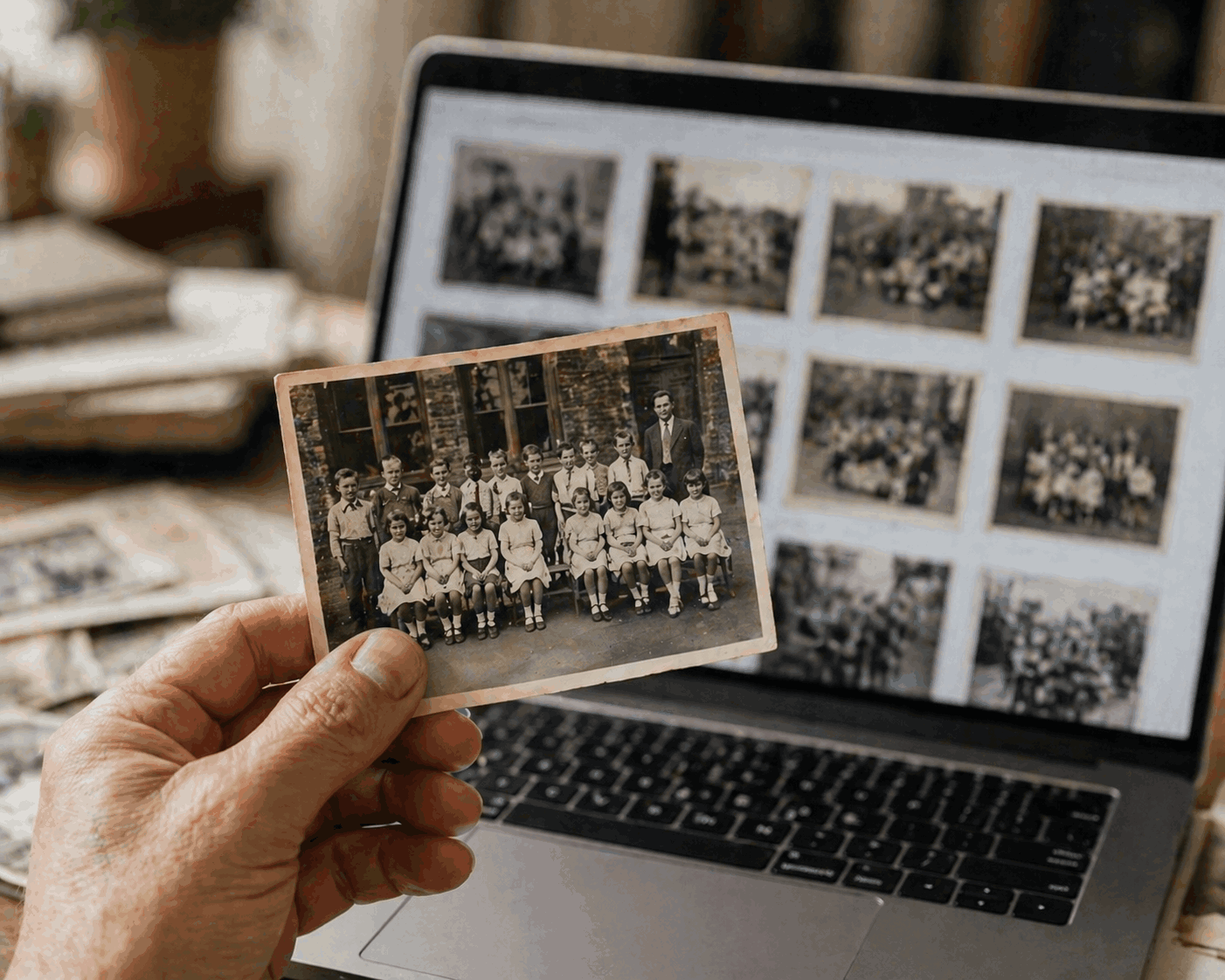
A school digital archive is a secure, searchable online platform that preserves an institution's historical materials (photographs, yearbooks, publications, records and more) and makes them accessible to the people who matter most: alumni, staff, students and the wider community.
That definition sounds straightforward. In practice, it covers everything from a box of unsorted photographs waiting to be scanned, to a living, community-driven collection where alumni are tagging faces, contributing memories and recording oral histories in real time. The distance between those two things is significant and understanding it is the first step to getting your archive right.
This guide is written for the people who tend to own this problem in schools: advancement directors, development managers, archivists, bursars and heads of communications. It covers what a school digital archive should contain, the different approaches available, how to build one from scratch, and how to make sure the time and resource you invest pays off.
What does a school digital archive actually contain?
Most schools have more archival material than they realise, and most of it is at risk.
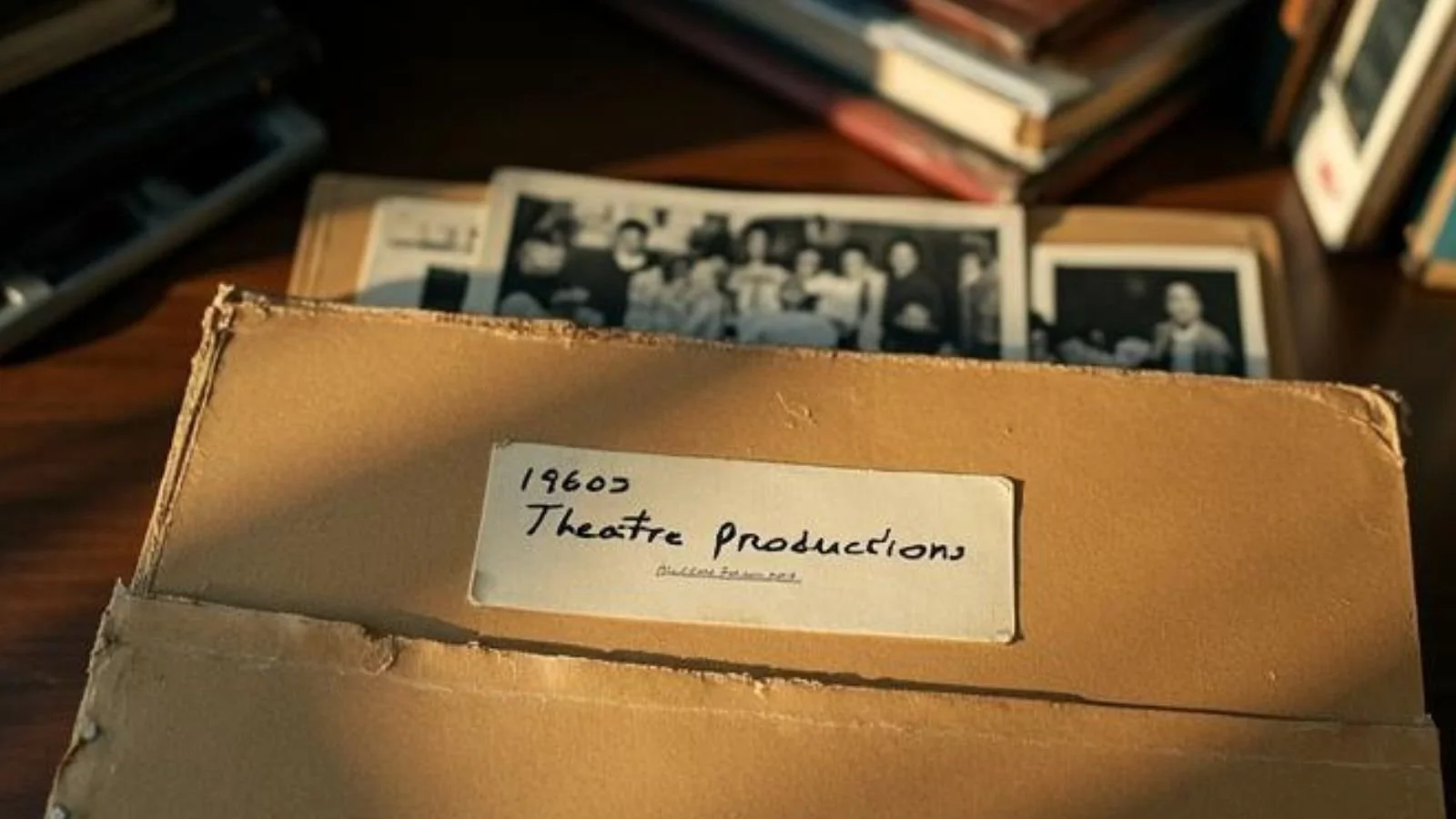
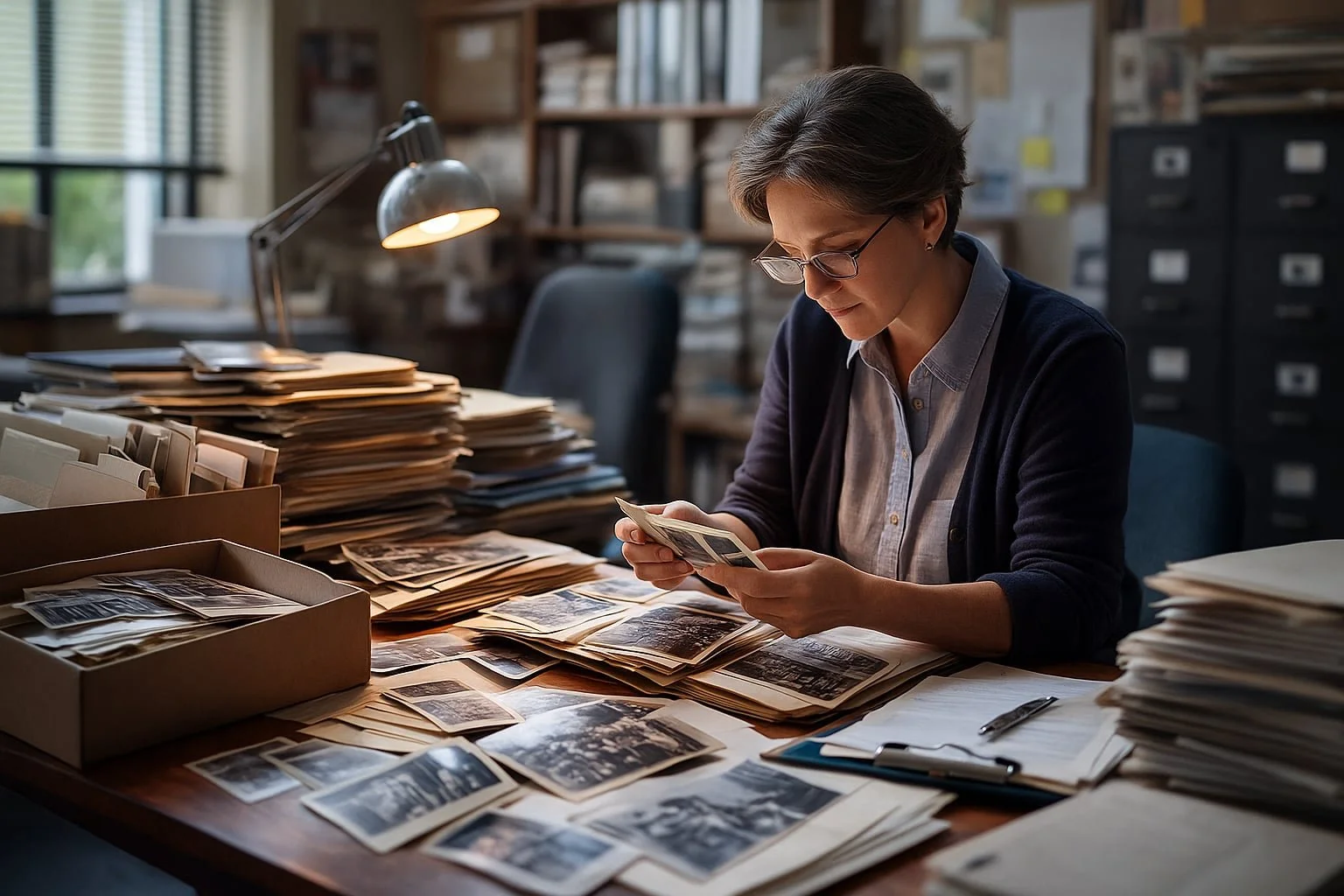
The core of any school archive is typically: historical photographs (individual, group and event), school magazines and publications, yearbooks, staff and student records, speech day programmes, governors' minutes, sports and academic records, correspondence, and, in more recent collections, video footage, audio recordings and social media content.
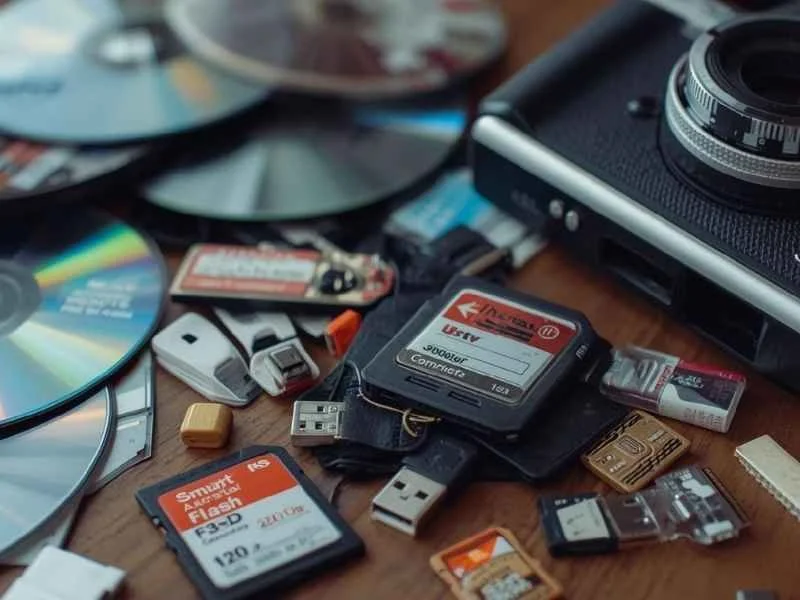
Alongside born-physical material sits an increasingly large body of born-digital content: email newsletters, website snapshots, digital photography from the early 2000s onwards. This material is often overlooked in archive projects, and in many ways, it is the most fragile. Formats change, servers get wiped, and the early digital era is quietly disappearing from school histories everywhere.
A well-structured digital archive brings all of this together in one searchable, secure collection. Google Drive and Dropbox are storage tools. A digital archive is properly indexed, searchable by name, date and event, with access controls, metadata structures and tools for engaging the community around the content.
Why schools need a digital archive, and why now
The preservation case
Physical materials deteriorate. Photographs fade, paper becomes brittle, magnetic tape degrades. Many schools are sitting on collections that are actively being lost to damp, poor storage conditions or simple age. Once they're gone, they're gone.
For Delphian School in Oregon, the risk became a reality when a burst water pipe flooded the room where their archive was kept, threatening decades of irreplaceable photographs, publications and records. It was the moment that prompted them to move their entire collection to SocialArchive, to recover what remained, and to ensure it could never happen again. A properly ingested digital archive preserves content at archival quality with redundant backups, removing the single point of failure that every physical collection carries.
There is also a less-discussed risk: the early 2000s memory gap. Many schools have strong photographic records up to the late 1990s (prints, slides, developed film), and again from the mid-2000s onwards with digital cameras and smartphones. The transitional years, the era of early digital cameras, early social media and disposable email accounts, are often almost entirely undocumented. The people who lived through that period are now in their thirties and forties, and their school years are already becoming invisible. The early 2000s memory gap is one of the most overlooked risks in school archiving.
The alumni engagement case
This is where the bigger opportunity lies.
A preserved archive is valuable. An archive that alumni can actually access, explore and contribute to is transformational. When an alumnus logs in and finds a photograph of themselves they have never seen before (their first day, their year group, a sports team from thirty years ago), something shifts. Research consistently shows that nostalgic recall of formative experiences increases feelings of social connectedness and generosity, and a school archive, done well, is one of the most direct ways to surface those moments at scale.
That recognition — "that's me," "that's my teacher," "I remember that day" — is the raw material of the alumni relationship. It drives giving, reunion attendance, referrals and mentoring. Schools that use their archive actively treat it as engagement infrastructure, deploying it in fundraising appeals, donor stewardship, anniversary campaigns and the ongoing work of building relationships with their alumni.
Heritage is one of the most underused tools in a school's development arsenal. When it is searchable, curated and connected to a community portal, archival content can be scheduled, published and targeted, reaching the right alumni with the right memories at the right moment.
The anniversary and milestone case
For schools approaching a significant anniversary, whether it’s a 50th, 100th or even 400th, a digital archive is the backbone of everything. It provides content for anniversary publications, videos, events and exhibitions,gives alumni a reason to re-engage ahead of the milestone, and ensures the moment is documented in a way that serves future anniversaries too.
The institutional memory case
Staff leave. Long-serving teachers retire. Heads move on. With them goes a significant amount of institutional knowledge… stories, context and history that exists nowhere in writing. A digital archive, particularly one with an oral history component, protects against that loss.
The three approaches: scanning bureau, repository software, and engagement platform
Understanding these three tiers before committing to any approach will save significant time and money.
1. Scanning and digitisation bureau
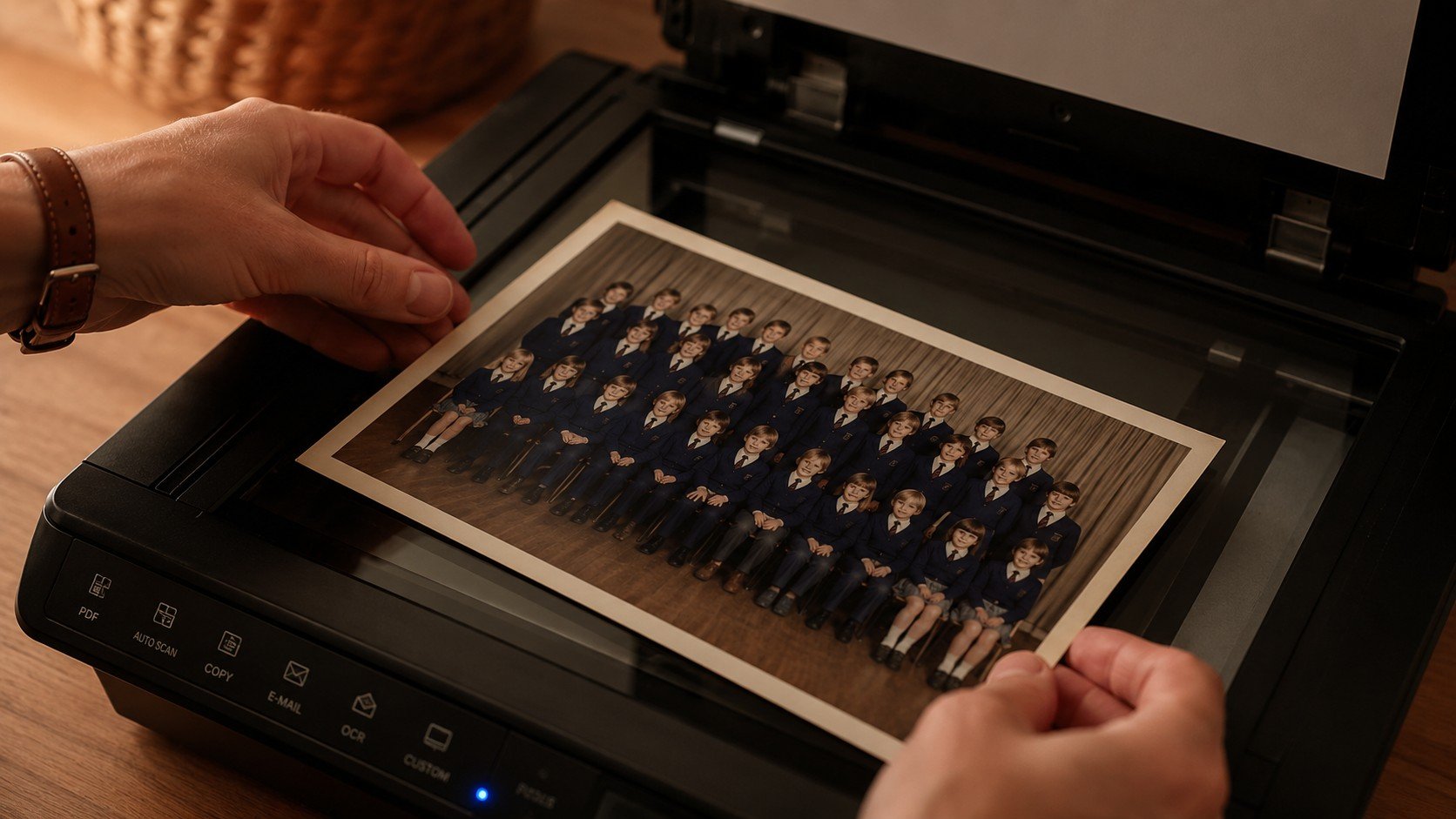
Many companies offer a service model: physical materials are sent for scanning and digitisation and returned as an organised digital collection hosted on a bespoke website. It is a well-established service, and for institutions whose primary goal is preserving at-risk physical materials and providing basic access, it delivers exactly that.
The resulting archive is a read-only repository. Alumni can browse it but cannot contribute to it. There are no community features; no commenting, no memory-sharing, no oral history tools. The collection does not connect to a development database or generate engagement analytics, and it grows only if materials are sent for further scanning.
2. General repository and cataloguing software
Platforms like Preservica and ArchivesSpace are designed for professional archival management: ISAD(G) standards, hierarchical description, detailed metadata management and long-term digital preservation guarantees. This tier serves universities, national institutions and schools with significant, professionally managed collections. Implementation requires technical resource, and the experience for a casual visitor, for example an alumnus looking for their year group photograph, is a secondary consideration.
3. Engagement-first archive platforms
Platforms built specifically for school and university communities combine proper archival management with community features that turn a collection into an active engagement tool. This is the tier that has emerged most clearly in recent years, and the one most relevant to schools with alumni engagement, fundraising or anniversary goals.
SocialArchive was built for exactly this: a single, secure home for all institutional history, with facial recognition, OCR full-text indexing, auto-transcription of audio and video, community contribution tools, Spoken Stories oral history capture, personalised alumni galleries, and direct integration with alumni CRM and development databases.
The key difference is the direction of travel. A scanning bureau moves content from physical to digital. An engagement platform moves content from digital to community (and then back again), as the community contributes, tags, comments and builds on what is there.
Schools with significant volumes of at-risk physical material may need a digitisation service as a starting point. For schools whose goals extend to alumni engagement, fundraising or community building, an engagement-first platform from the outset will serve those goals far more effectively.
What to prioritise in your archive
A good archive project starts with triage:
1 - Prioritise by vulnerability first.
Old photographs, nitrate film, magnetic tape and fragile publications should be addressed before robust modern printed materials. Anything that could be permanently lost within five years goes to the top of the list.
2 - Prioritise by community value.
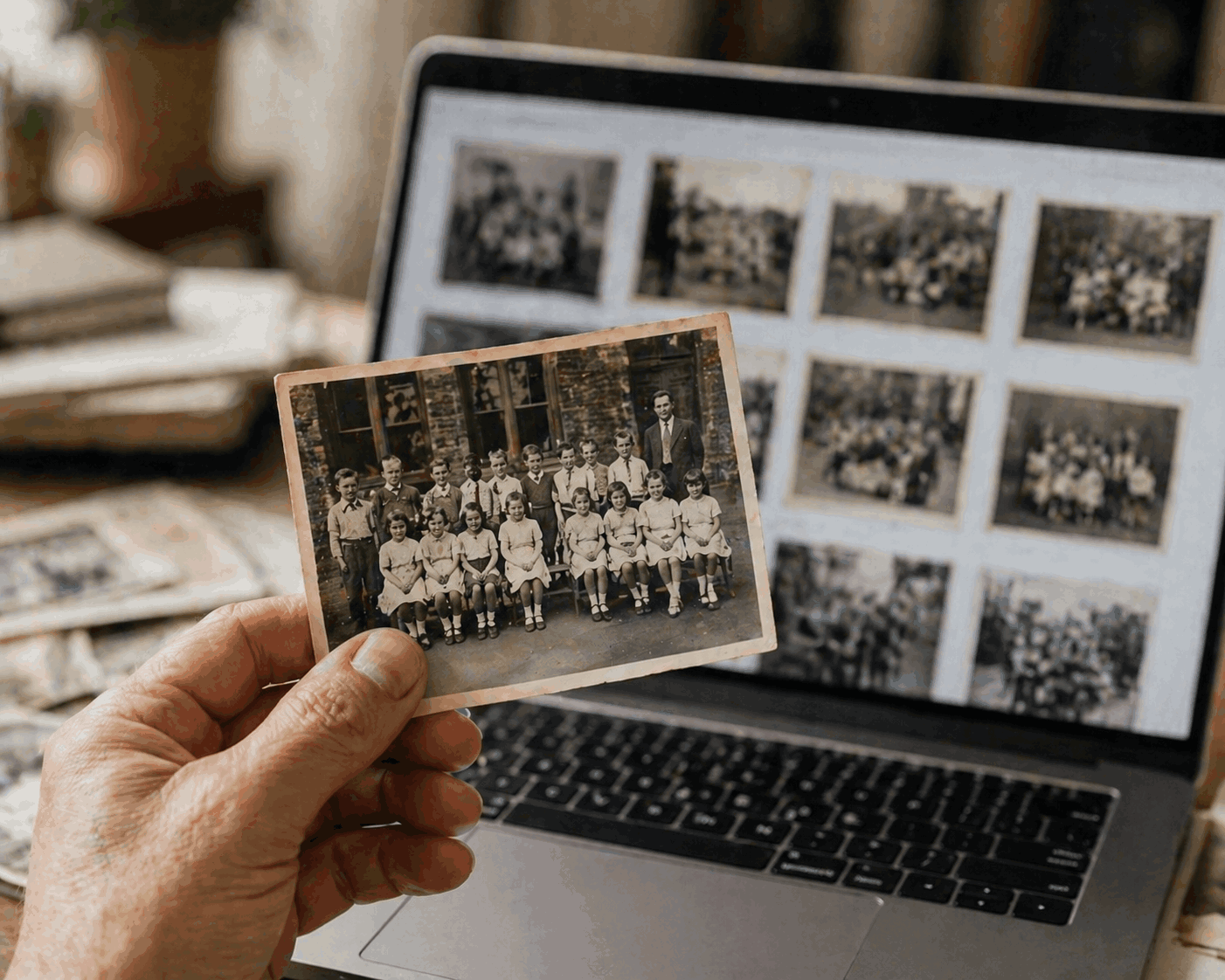
Year group photographs, sports team photos and school magazine archives consistently generate the highest engagement. Historical staff photographs and notable event coverage come next. Governors' minutes and administrative records have archival value but rarely drive community engagement.
3 - Prioritise by upcoming reunion cohorts
If a particular year group has a 10th, 25th or 50th reunion on the horizon, that cohort becomes an immediate priority. Identifying and digitising the photographs, publications and records from their years gives you targeted content to promote ahead of the event, and gives returning alumni a personal reason to engage with the archive from the moment they register. A reunion is one of the highest-engagement moments in the alumni calendar, and an archive that surfaces memories specific to that cohort amplifies everything around it.
4 - Identify and address gaps with memory campaigns
Most school archives have uneven coverage. Strong in some decades, thin or missing in others. Once you have a rough picture of what exists, gaps become as important as the material you have. A targeted memory campaign, inviting alumni from underrepresented years to submit photographs, share recollections or record a Spoken Story can help fill those gaps. The early 2000s memory gap we mentioned earlier in this article is the most common example, but every school's collection has its own blind spots. Finding them early shapes the whole project.
How to build a school digital archive: a practical step-by-step
Step 1: Audit what you have
Map the existing collection before anything else. A rough inventory by category, date range and format is enough to start making decisions. Note what is in good condition, what is at risk, and what exists in a single copy only.
Step 2: Define your goals
Preservation, alumni engagement, an upcoming anniversary, fundraising support — the goal shapes every subsequent decision, from which approach to take, to which content to prioritise, to what success looks like. A school with an anniversary in two years has different priorities to one beginning a long-term community-building programme.
Step 3: Resolve consent and safeguarding
Establish an approach to consent before publishing any content, particularly photographs. Photographs of minors require careful handling — UK GDPR applies to personal data including images — and a good archive platform will include permissions management, watermarking, redaction tools and GDPR-compliant consent workflows as standard. For historical content, a notice-and-objection approach is often appropriate. For more recent content involving current or recently departed students, the bar is higher. Handling this at the outset is significantly easier than retrospectively.
Step 4: Choose your approach
Based on goals and consent considerations, decide whether a scanning bureau, a repository platform, an engagement platform, or a combination is right. Institutions with significant volumes of physical material may need a digitisation service alongside their platform. Collections that are already largely digital can move directly to an engagement platform.
Step 5: Structure your metadata
A digital archive is only as searchable as its metadata. Every item should have at minimum a title, a date or approximate date range, a category, and any identifiable people or events tagged. An engagement platform such as SocialArchive, will handle OCR indexing, facial recognition and auto-transcription automatically, significantly reducing the manual metadata burden.
Step 6: Launch and build community contribution
The most powerful archives are built by the community. When alumni can identify faces in photographs, add context to events, submit their own content and record their own memories, the collection grows without proportional cost. The more people engage, the richer the archive becomes.
Step 7: Integrate with your wider engagement strategy
The most effective schools use their archive actively: scheduling regular content releases to their community, pulling heritage imagery into fundraising appeals and admissions materials, building anniversary campaigns around archival content, and using Spoken Stories recordings at reunion events and within development communications.
How a school digital archive supports alumni engagement and fundraising
Alumni who feel a strong sense of belonging to their former school give more, attend events more, refer prospective families more and engage more deeply over time. Belonging is built from identity and memory. A digital archive that surfaces personalised content, prompts memory-sharing and connects alumni with each other builds that belonging at scale, across thousands of individuals simultaneously.
Nostalgic recall of formative experiences increases feelings of social connectedness and generosity. A photograph from someone's first year, a recording of a speech they gave at prize day, a comment thread where they're recognised by a former teacher… these moments are the raw material of the alumni relationship, and a well-built archive surfaces them personalised to each individual.
When archival content is searchable, curated and publishable, it becomes deployable: in fundraising appeals, donor stewardship, anniversary campaigns and the ongoing work of engaging alumni.
Schools putting this into practice
The Latymer Foundation's archive project demonstrates what becomes possible when heritage and engagement strategy work together. Using SocialArchive, the Foundation reconnected 596 lost alumni (49% above their original target) while building a living archive that gives the whole community a way back into their shared history. The project was recognised with a CASE Grand Gold Award in 2025. Read the full Latymer Foundation case study →
The Headmaster of Brentwood School puts it well:
As a history teacher, I have always been aware of Brentwood School's significant and long past. Of course, within this history are the people and stories that are central to our community and identity. The challenge was to find a way to present this in a way that wasn't static, to make it dynamic, with something that invites engagement. SocialArchive has given us that platform, to bring our archive to life, making it interactive, accessible, and scalable for the future. Seeing so many people sign up and explore in just a short time proves how powerful our history is when combined with SocialArchive.
Key features to look for in a school digital archive platform
If you are evaluating platforms, these are the criteria that matter most for a school or university context.
Search and discoverability
OCR full-text indexing of documents and publications, facial recognition across the photographic collection, audio and video transcription, and filtering by name, date, event and format make the difference between an archive people use and one they don't.Community contribution tools
Alumni should be able to upload photographs and content, add names and context to existing items, and submit memories — all subject to a moderation workflow before anything is published.Oral history capture
The ability to invite alumni, staff and community members to record audio or video memories, with automatic transcription, cataloguing and search indexing, is increasingly central to what the best school archives offer.Personalised alumni galleries
Facial recognition across the archive gives every person who features in the collection their own automatically generated gallery — a powerful first experience for any alumnus logging in for the first time.Safeguarding and consent management
Watermarking, redaction, GDPR-compliant removal request workflows and permissions management at collection, series and item level are essential for any school publishing content that includes images of minors or personal data.Alumni CRM
Look for a platform that either includes its own alumni CRM or integrates cleanly with the one you already have, with single sign-on support and the ability to connect archive engagement to your wider development database.Engagement analytics
Understanding which content alumni are viewing, commenting on and sharing (and connecting that to giving data) turns an archive from a heritage project into a measurable development asset.
SocialArchive was built to meet all of these. It combines professional archival management with community contribution tools, audio and video capture, facial recognition, personalised alumni galleries, safeguarding controls, and its own alumni CRM (which also integrates with Raiser's Edge, Potentiality and Veracross for schools that prefer to keep their existing system). Explore the full feature set →
Common challenges and how to approach them
"We don't have the staff capacity."
Community contribution and volunteers can do a significant amount of cataloguing work — identifying faces, adding dates and context — that would otherwise fall to a single member of staff. A platform built to make that easy changes the resourcing picture substantially.
"We don't know what we have."
A rough audit is enough to start. A morning mapping what categories of material exist, in what locations and approximate condition, is enough to make the first decisions. A complete inventory can follow over time.
"We're worried about GDPR and consent."
UK GDPR doesn't prohibit publishing historical photographs (legitimate interest is a recognised lawful basis for many archival uses) but it does require a clear process for handling removal requests, managing sensitive content and protecting the personal data of living individuals.
"We already use Google Drive or SharePoint."
Cloud storage serves a different purpose. A digital archive is searchable by name, date and event across thousands of items, accessible to alumni, and built for community contribution.
"We can't justify the cost."
Schools that use their archive to reconnect lost alumni, drive reunion attendance and support fundraising appeals typically see returns that significantly outweigh the platform cost. SocialArchive is priced to be accessible for schools of all sizes, including smaller independents and state schools.
Getting started
The schools that end up with the richest collections typically started with a single project. Digitising a run of school magazines, or building a photographic archive for an upcoming anniversary, and then built from there.
SocialArchive works with schools, colleges and universities across the UK, US and beyond to build archives that preserve history and put it to work. If you are considering a project at any stage of planning, our team is happy to talk it through.
FAQS:
What is a school digital archive?
A school digital archive is a secure, searchable online platform that stores and organises an institution's historical materials (photographs, yearbooks, publications, records, audio and video) and makes them accessible to alumni, staff, students and the wider community.
How is a digital archive different from cloud storage?
Cloud storage tools like Google Drive and Dropbox are designed to hold files. A digital archive is built to make those files findable and usable with full-text OCR indexing, facial recognition across photographs, metadata structures, access controls, and tools for the community to contribute and engage with the content.
What should a school digital archive include?
Most school archives include historical photographs, school magazines and yearbooks, staff and student records, speech day programmes, sports and academic records, video and audio recordings, and born-digital content such as more recent photographs and video content. Priority is typically given to materials at most physical risk first, or those that will drive initial engagement.
How do schools get started with digitising their archive?
The best starting point is a rough audit of what exists, where it is and what condition it's in. From there, schools can define their goals (preservation, alumni engagement, an upcoming anniversary) and choose the right approach. Most schools begin with a single focused project and build from there.
Is a school digital archive subject to GDPR?
Yes. UK GDPR applies to personal data including images of identifiable individuals. Schools publishing historical photographs should establish a clear approach to consent, with processes for handling removal requests and managing sensitive content. Legitimate interest is a recognised lawful basis for many archival uses, but the right platform will have GDPR-compliant workflows built in as standard.
How does a digital archive support alumni fundraising?
Research consistently shows that nostalgic recall of formative experiences increases feelings of generosity and social connectedness. A digital archive that surfaces personalised content (photographs, recordings, memories) to individual alumni builds the sense of belonging that drives giving, reunion attendance and long-term engagement.
What is the difference between a scanning bureau and an archive platform?
A scanning bureau digitises physical materials and hosts them in a read-only online collection. An archive platform combines digitisation with community features (alumni contribution, facial recognition, oral history capture, engagement analytics and CRM integration). The right choice depends on whether your goal is preservation alone or preservation plus community engagement.
Can SocialArchive integrate with our existing alumni CRM?
Yes. SocialArchive includes its own alumni CRM and also integrates with Raiser's Edge, Potentiality and Veracross. Further integrations are available upon request.
Other articles that may be of interest: