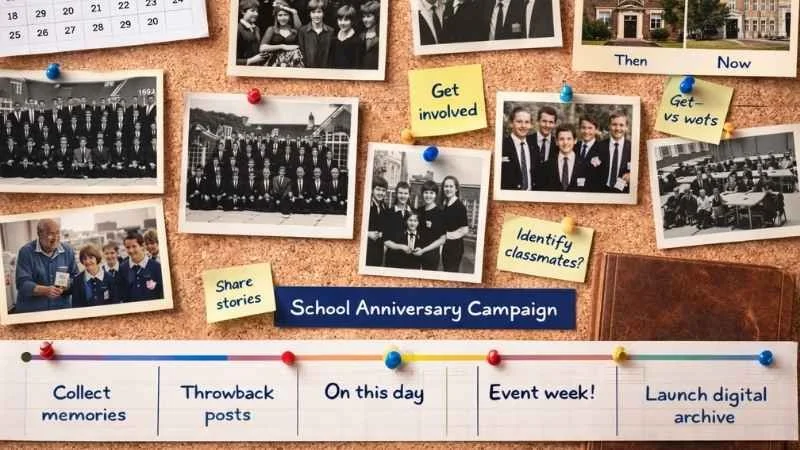
6 Ways to Use Your School Anniversary to Engage and Reconnect Your Alumni
LAST UPDATED: April 2026

A school anniversary or milestone event is one of the most effective opportunities to improve alumni engagement, reconnect lost alumni, and strengthen long-term relationships.
A school anniversary is one of the rare moments when alumni who have ignored your communications for years will suddenly pay attention. This article is not about how to throw a good party. It is about how to use that window deliberately; to reconnect lost alumni, collect stories, strengthen your data, and build engagement that lasts well beyond the celebrations.
Most anniversary campaigns focus on the event. The dinner. The programme. The commemorative booklet. These things matter. But the institutions that get the most long-term value from a milestone are the ones that treat it as a strategic opportunity rather than a calendar date.
An anniversary creates something that is very difficult to manufacture any other time: genuine emotional permission to reach out. Alumni who have not responded to your emails in five years will respond to a message tied to a significant milestone. The nostalgia is real, the curiosity is real, and the window to act on it is limited.
Key Takeaways:
A school anniversary is one of the most effective moments to reconnect lost alumni
The most successful campaigns focus on participation, not just events
Personalised archive experiences drive significantly higher engagement
Story collection builds belonging, which supports giving and volunteering
The real value comes from what you build after the anniversary ends
Why anniversaries work (and why timing matters)
Anniversaries concentrate attention in a way that few other moments can. Nostalgia peaks around significant milestones, particularly when alumni see others from their year group engaging. There is a sense of shared participation, of something happening now that they might miss.
At the same time, alumni expect to hear from their school during a milestone year. Outreach feels natural rather than intrusive. That combination (emotional readiness and social expectation) creates a short but powerful window for reconnection. The institutions that recognise this treat anniversaries not as isolated events, but as catalysts for long-term engagement.
Looking for school anniversary ideas?
Many schools begin planning a milestone by searching for school anniversary ideas. Anything from reunions and performances to commemorative items and fundraising campaigns. These can all play an important role in your celebrations. But the institutions that see the strongest long-term alumni engagement use these ideas differently.
Instead of treating them as standalone activities, they use them as part of a wider strategy to reconnect alumni, collect stories, and build lasting relationships.
Emotional readiness
- Nostalgia peaks at milestones
- Alumni see peers engaging
- Fear of missing out
- Sense of shared participation
Social expectation
- Alumni expect to hear from you
- Outreach feels natural
- Milestone gives permission
Short but powerful
The window
peak reconnection moment
Isolated event
Peaks, then returns to baseline
Catalyst
Start of long-term engagement
The ideas below are designed not just to celebrate the milestone, but to use it as an opportunity to reconnect alumni and build lasting engagement.
1. Use your anniversary as a narrative hook to reconnect lost alumni
Every institution has alumni it has lost contact with. Some left before email was standard. Some moved, changed their name, or changed jobs. Some simply drifted. Under normal circumstances, reaching out to these people is difficult. There is no obvious reason for contact that feels relevant to where they are in their lives now.
An anniversary changes this completely. A significant milestone, whether it’s a 50th, a centenary, or a 400th, gives you a narrative that is genuinely compelling to people who care about the institution but have had no reason to act on that care. You are not asking them to update their details or attend an event. You are telling them that something historically significant is happening, and that you would like them to be part of it.
This is one of the most effective anniversary campaign ideas for reconnecting alumni who have lost touch over time.
One example of this, is The Latymer Foundation who used its 400th anniversary as the central narrative for its reconnection strategy. By creating a digital home for shared history (using SocialArchive) and running a structured campaign anchored to the milestone, the school reconnected 596 lost alumni in twelve months, exceeding its original target by 49%. The campaign won the CASE Circle of Excellence Award 2025, Grand Gold in Alumni Relations Initiatives.
For a full guide to running a lost alumni reconnection campaign, see How to Reconnect with Lost Alumni: 10 Practical Ideas That Work.
2. Build a personalised archive experience that gives alumni a reason to return
One of the most powerful things an anniversary can do is give alumni something personal to find. Not institutional history. Not a timeline of headteachers and building projects. Something that connects directly to their own experience of the school.
Among the most effective school anniversary ideas are those that give alumni something personal to discover.
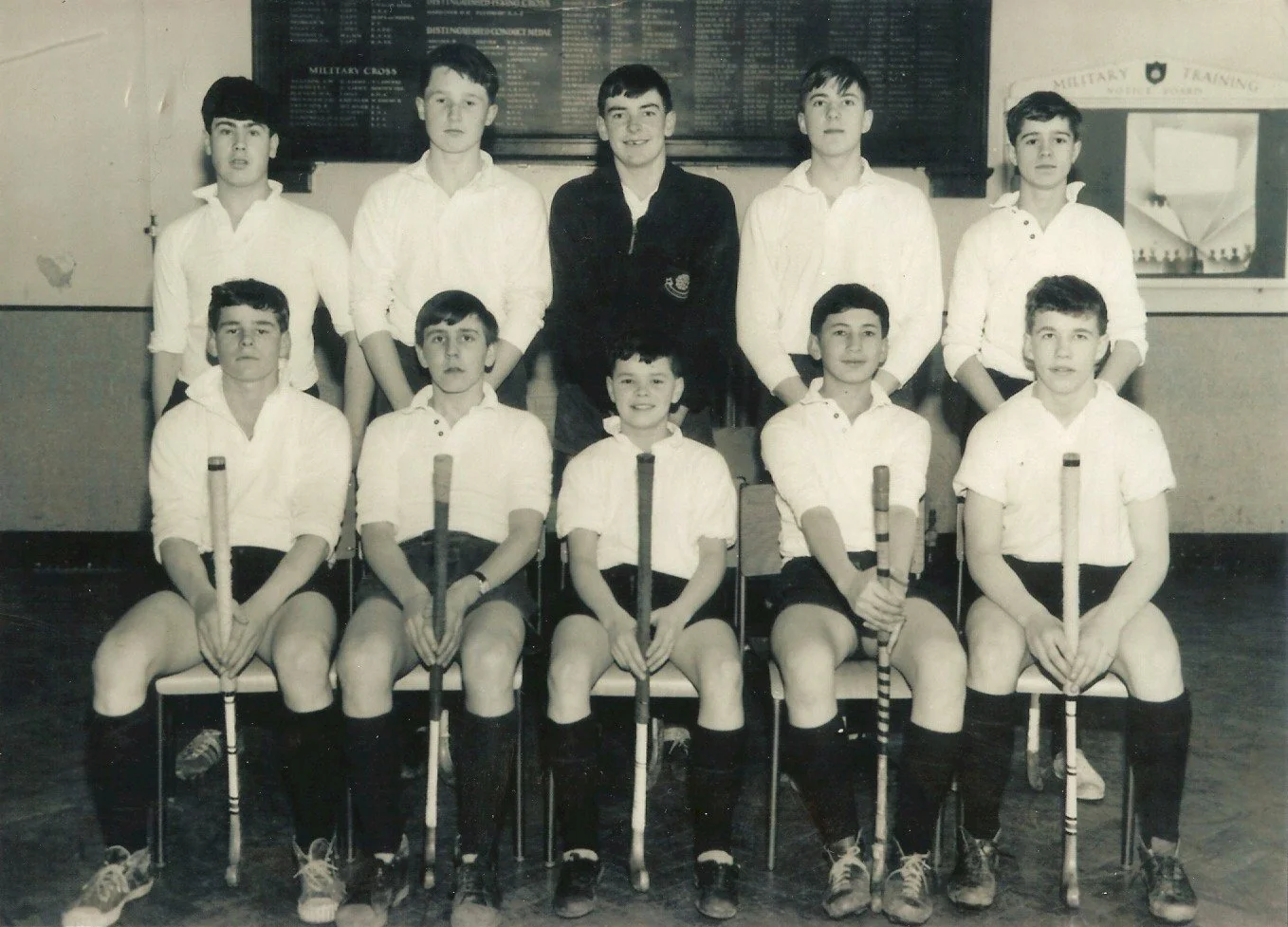
A well-organised digital archive, made accessible as part of the celebration, does this at scale. An alumnus from the class of 1987 who discovers a gallery of photographs from their years — their sports teams, their productions, their year group — has a fundamentally different relationship with your alumni and development programme than one who receives a generic newsletter about the school's history.
Facial recognition technology takes this further. By scanning your entire digitised archive and automatically identifying individuals across decades of photographs, you can build a personalised gallery for each alumnus including every image in your archive that features them specifically. When a lost or disengaged alumnus receives a notification that they have been found in thirty photographs from their time at school, the emotional impact is immediate and personal.
3. Collect alumni voices as a core part of the anniversary programme
The most valuable content a milestone generates is the personal stories and memories of your community.
Story collection is often overlooked in traditional anniversary event ideas, but it is one of the most powerful ways to build long-term engagement.
Alumni voices are compelling in ways that institutional history rarely is. A sentence from a former pupil about a teacher who changed their life, or a photograph from a school trip that nobody had seen in thirty years, carries more emotional weight than any amount of carefully written anniversary copy. Crucially, collecting these voices creates participation. It turns alumni from passive recipients into active contributors.
Research consistently shows that alumni with a stronger sense of belonging are significantly more likely to give and to volunteer. The act of contributing a story or a photograph to the institutional record deepens that connection in a way that simply attending an event does not. This is also closely linked to how nostalgia and memory influence long-term support and engagement.
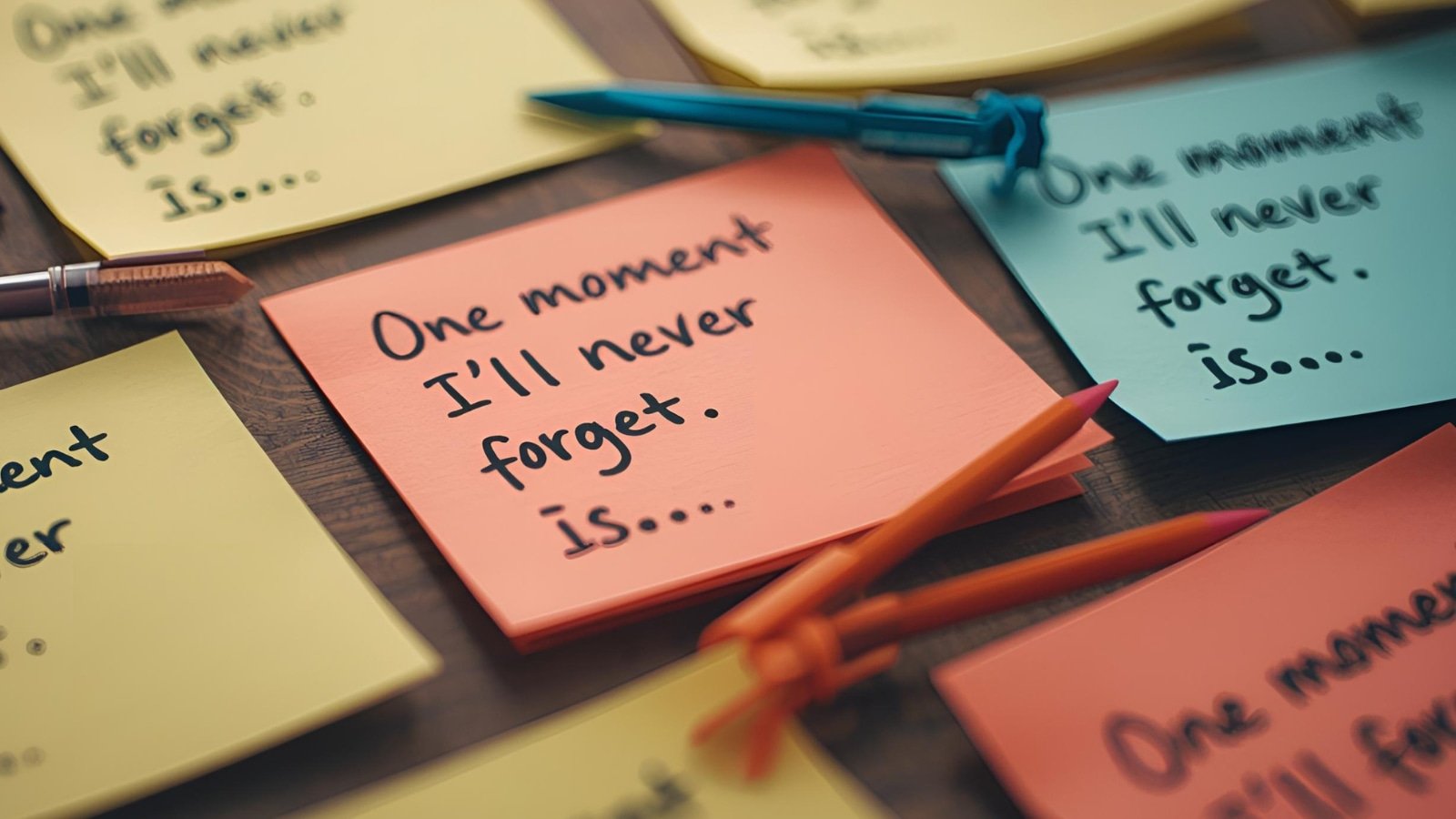
Simple prompts work better than open-ended requests. Rather than asking alumni to “share their memories,” offer specific questions: What is a moment at school you have never forgotten? Who made the biggest impact on you? What did school teach you that stayed with you?
Spoken Stories, configured within the SocialArchive platform, make this process effortless. Alumni record a short audio or video reflection from their phone, with no interviewer, no scheduling, and no technical complexity.
For more on why alumni voice and participation drives long-term engagement, see The Power of Participation: Why Every Alumni Voice Matters.
This month's prompt
What is a moment at school you have never forgotten?
Richard Hargreaves
Mr Albright stayed behind every Thursday for a year to help me with my A-level essay technique. I got into Oxford. I never told him what that meant.
Clare Weston
We found a photograph from the 1993 production nobody had seen in thirty years. Six of us are now in touch again because of it.
James Patel
Being asked to contribute felt different from being asked to donate. Like the school actually wanted to hear from me, not just from my wallet.
4. Use the anniversary to improve your alumni data
The window created by a milestone is also a powerful opportunity to improve your alumni data. Alumni who are emotionally engaged are far more likely to update their contact details, opt in to communications, and give consent for ongoing contact than they would be in response to a routine request.
This matters practically. Development offices consistently report that outdated and incomplete alumni data is one of their biggest operational constraints. A campaign that captures updated email addresses, current locations, year groups, and areas of interest from even a fraction of previously unreachable alumni has lasting value well beyond the celebration itself.
The key is to make the data update feel like part of the experience rather than an administrative requirement. An alumnus who scans a QR code at a reunion event to access their personalised gallery, and is then invited to update their details as part of that process, is in a very different frame of mind from one who receives a standalone email asking them to fill in a form.
Include a clear, simple update prompt in every communication
Make the process mobile-friendly and completable in under two minutes
Frame it around access to something valuable — their personalised gallery, anniversary content, or the ability to contribute their own story
Use reunion events as a natural moment to capture opt-ins from alumni who attend but are not yet in your active database
Valuable experience first
Gallery, anniversary content, QR code, story contribution
Update prompt in the flow
Mobile-friendly, under two minutes. Access, not admin.
High consent rate
Updated data, opted-in alumni
Context-framed
Emotionally engaged alumni are far more likely to update details and give consent
- Prompt in every communication
- Capture opt-ins at events
Standalone email
Routine request, no surrounding experience or context
Feels like admin
No emotional hook. Easy to ignore or defer.
Low response rate
Data stays outdated
Cold request
Outdated alumni data is one of the biggest operational constraints development offices face
5. Connect alumni to current students through the anniversary
A milestone is a natural moment to bridge generations. It connects the school's history with its present and gives alumni a role in the life of current students that goes beyond financial support.
Not all school anniversary ideas need to centre on events. Some of the most valuable are those that create lasting resources for students.
Careers contribution is one of the most effective ways to do this. Alumni who left school five, ten, or twenty years ago have navigated exactly what current students are thinking about: university applications, first jobs, and early career decisions. Their experience is timely and relevant in a way that older alumni often is not.
A milestone creates an obvious moment to invite this contribution and to build a careers library of alumni stories and reflections that current students can access on demand.
Critically, this can be done in a safeguarding-safe way. A curated library of alumni career stories, collected through the SocialArchive platform, involves no direct contact between alumni and students. Content is reviewed before publication. The value to students is often higher than traditional mentoring because they can access it when it is relevant to them, rather than waiting for a scheduled session.
For more on building a careers library as part of your alumni programme, see Why a Careers Library Is the Simplest Way to Start an Alumni Careers Programme.
6. Turn the anniversary into the beginning of a long-term engagement programme
This is where most campaigns miss their biggest opportunity. The event happens. The dinner is a success. The commemorative book is distributed. Then three months later, engagement levels return to exactly where they were before.
The alumni who reconnect during the milestone are the most valuable asset the campaign generates. But that value only compounds if there is a structure in place to sustain the relationship after the celebrations end. A campaign without follow-through does its hardest work and then walks away from the results.
The infrastructure to build during the anniversary period is the same infrastructure that will serve your alumni relations programme for the next decade:
A well-organised digital archive that is accessible year-round
A community platform where alumni can stay connected to each other and to the institution
A careers library that grows with every cohort that contributes to it
A data set that is accurate, consented, and usable
Specific things to put in place before the anniversary ends
A digital archive that remains open and accessible after the event
A clear communication plan for the twelve months following the milestone — what you will send, when, and why
A mechanism for alumni who reconnected to stay involved — volunteering, mentoring, careers contribution, reunion planning
A review of what the anniversary taught you about your alumni community — which cohorts engaged most, what content performed best, and where the data gaps remain
For a framework on building year-round engagement around reunion moments, see Turn Alumni Reunions into Year-Round Engagement Campaigns.
Before the anniversary ends
Digital archive
Remains open after the event
Keep the archive accessible year-round, not just during the campaign window. The asset you built doesn't expire.
12-month comms plan
What, when, and why
Map out the touchpoints for the year ahead — before momentum fades and the team moves on to the next project.
Involvement pathways
Ways for alumni to stay engaged
Volunteering, mentoring, careers contribution, reunion planning — give reconnected alumni somewhere to go.
Community review
What the anniversary taught you
Which cohorts engaged, what content performed, where the data gaps remain. Turn insight into next year's strategy.
Classic school anniversary ideas (and how to make them more effective)
Many anniversary plans include familiar elements: alumni reunions, performances, fundraising campaigns, commemorative items, and historical exhibitions. These remain valuable, but their impact depends on how they are used.
Reunions can become powerful moments for reconnection, data capture, and story collection
Events and performances can showcase the long-term impact of the institution through alumni participation
Fundraising campaigns can be made more effective through personalisation and relevance
Commemorative items can evolve into digital, personalised experiences rather than generic merchandise
Exhibitions and archives can shift from static displays to interactive, participatory experiences
The difference is not in the idea itself, but in how intentionally it is used.
Make your anniversary work harder
A school anniversary creates a level of alumni attention and emotional openness that is genuinely difficult to manufacture at any other time. The institutions that make the most of it are not necessarily the ones with the biggest budgets or the most ambitious events. They are the ones that treat the milestone as a strategic opportunity to reconnect, to collect, to improve their data, and to build the infrastructure for long-term engagement.
The window is real. But it is also limited. Nostalgia peaks around the milestone and then fades. The alumni who were open to re-engaging will not be as open six months later. The time to act is now, not after the event.
See how SocialArchive supports anniversary alumni engagement
If you are planning an anniversary and want to think strategically about how to use it, we are always happy to talk it through.
Book a demo or email us to explore what might be possible for your institution.
FAQs:
How do you use a school anniversary to engage alumni?
The most effective approach treats the anniversary as a campaign rather than an event. Use the milestone as a narrative hook for reconnection outreach, build a personalised archive experience that gives alumni something specific to find, collect their voices and stories as part of the programme, and put the infrastructure in place to sustain engagement after the celebrations end.
How can a school anniversary help reconnect lost alumni?
An anniversary creates emotional permission to reach out that is very difficult to manufacture at other times. Alumni who have not responded to routine communications for years will often respond to outreach tied to a significant milestone. The narrative of the anniversary makes the contact feel relevant and purposeful rather than administrative. Latymer Upper School used its 400th anniversary to reconnect 596 lost alumni in twelve months, exceeding its target by 49%.
What is the best way to collect alumni memories for a school anniversary?
Specific prompts work significantly better than open-ended requests. Ask alumni what moment they have never forgotten, who made the biggest impact on them, or what school taught them that stayed with them. Make submission as frictionless as possible. Spoken Stories, configured within the SocialArchive platform, allows alumni to record short audio or video reflections from any device without any scheduling or technical complexity.
How do you sustain alumni engagement after an anniversary?
Build the post-anniversary plan before the event takes place. Identify what you will send to alumni who re-engaged, how you will keep the digital archive live and accessible, and what ongoing involvement opportunities exist for alumni who want to stay connected. The alumni who reconnect during an anniversary are the most valuable asset the campaign generates but the value only compounds if there is a structure in place to sustain the relationship.
How does a school anniversary support fundraising?
Anniversary campaigns strengthen fundraising by building the emotional conditions that make giving feel natural rather than transactional. Alumni who have reconnected, contributed their stories, and feel genuinely part of the institution's history are significantly more receptive to a fundraising conversation than those who are approached cold. The anniversary itself should not lead with an ask. It should build the relationship that makes the ask, when it comes, feel like a natural next step.
How does SocialArchive support school anniversary alumni engagement?
SocialArchive provides the digital infrastructure that makes archive-led anniversary engagement possible: digitisation and organisation of your archive, facial recognition that builds personalised alumni galleries, Spoken Stories for collecting alumni voices, and a community platform that keeps alumni connected after the celebrations end.
Other resources: