How to Use Alumni to Identify People in Old School and University Photographs
LAST UPDATED: October 2026
From reunion identification projects to digital crowdsourcing and facial recognition, discover how schools, colleges and universities can turn their alumni communities into an invaluable resource for preserving institutional history.
Every school and university archive contains photographs of people whose names have been lost somewhere along the way.
A school sports team from 1978. A university society gathering in the 1990s. A group of pupils standing outside a building that no longer exists.
The photographs have survived, but much of the knowledge that gives them meaning has not.
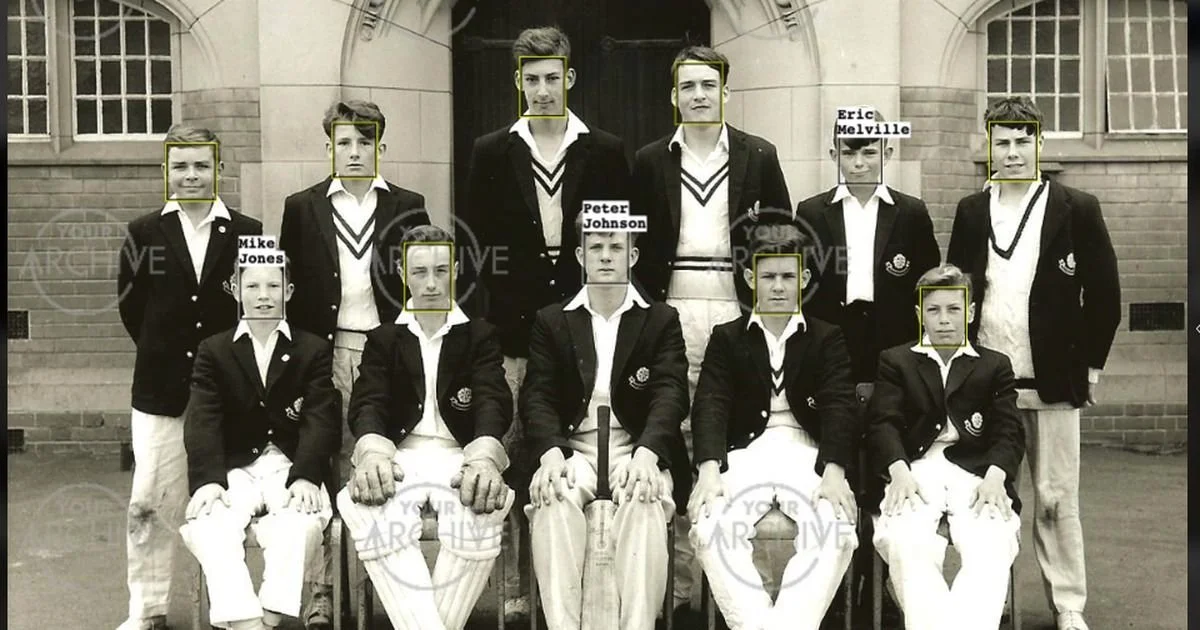
Somewhere within the institution's alumni community, however, there may be someone who recognises every face in the photograph. Someone who remembers the occasion, the people involved and the stories behind it.
The challenge is connecting that knowledge with the archive.
For schools, colleges and universities, alumni photograph identification projects offer an opportunity to preserve information that might otherwise be lost, while giving former pupils and students a meaningful reason to reconnect with their institution.
Why alumni are an invaluable resource for identifying school and university photographs
Institutional records rarely tell the whole story. A programme might list the musicians in a 1985 school orchestra without establishing who's who in the photograph. A former member of that orchestra could identify several of them immediately and remember the teacher who ran it besides. Alumni bring the context that turns an unidentified photograph into a real piece of institutional life.
It's also a different kind of ask. Much alumni communication invites former students to attend, donate or volunteer. A photograph identification project simply asks them to remember.
For alumni who rarely attend events or respond to fundraising appeals, the opportunity to recognise an old friend, identify a former teacher or share a forgotten memory may provide a different reason to engage.
Naming a face might seem like a small contribution, but it gives alumni an active role in preserving their institution's history. They become contributors to the archive rather than simply its audience.
How to organise an alumni photograph identification project
The idea of asking alumni to help identify an entire archive can feel unmanageable, particularly with limited archive resources. It works far better with a clear scope than as an open-ended "help us name everyone" appeal.
Start with a defined collection, not the whole archive.
A specific decade, a particular sports team, one building, or the years around a single headteacher or vice-chancellor's tenure all work well. A bounded collection is easier to promote, easier for alumni to engage with, and easier to measure.
Sort before you publish.
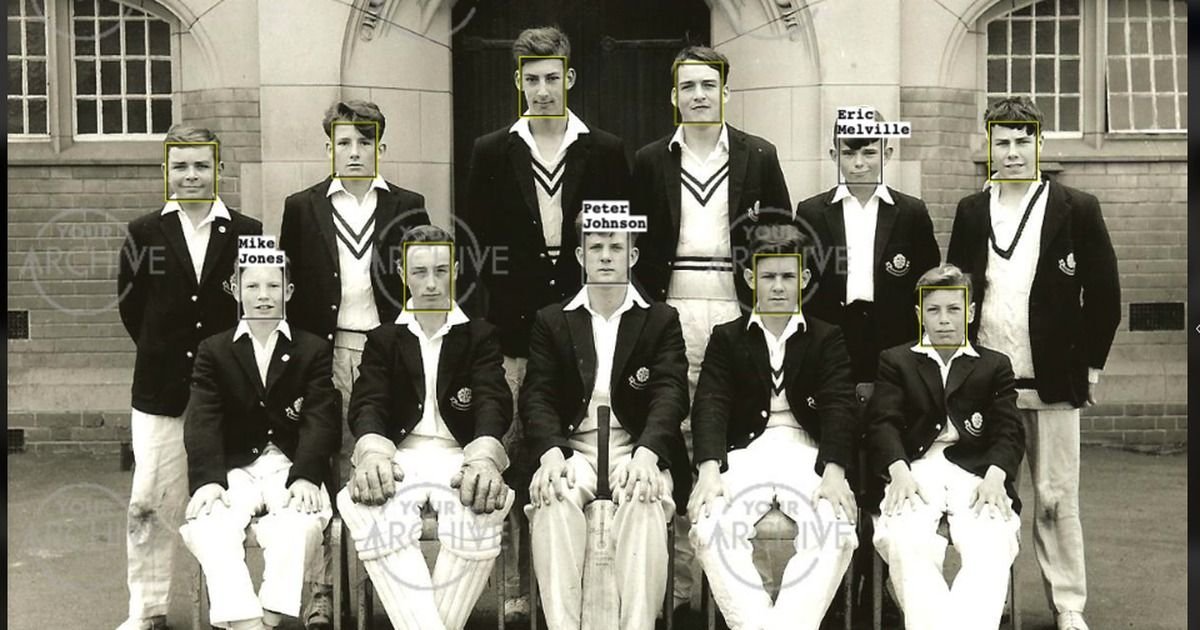
Group photos by rough date, event type or location if any of that is known, even loosely. Alumni recognise context faster than isolated faces. A caption such as 'Cricket 1964, U14s' gives alumni a useful starting point, helping them narrow down the people and events they may recognise.
Identify who's likely to know.
If the collection covers a specific year group or team, that's your first audience. Reach them through year-group mailing lists, class representatives or alumni association contacts before broadcasting to the whole database.
Make contributing as straightforward as possible.
An identification project should not require alumni to understand archival cataloguing or specialist terminology.
The most useful contribution may be as simple as recognising a face and providing a name, alongside the opportunity to leave recollections or memories if they wish.
How to organise a photograph identification project
Four steps to a project alumni can actually get started on
Start with a defined collection
Not the whole archive — a decade, a team, or one building
Sort before you publish
Even a rough date or event gives alumni a starting point
Identify who's likely to know
Reach the relevant year group before broadcasting to everyone
Make contributing easy
Recognising a face and giving a name should be enough
Using alumni reunions to identify people in old photographs
Alumni reunions provide a particularly valuable opportunity to bring photographs and the people who remember them together.
Former pupils and students are already gathered in one place, often with friends and classmates they have not seen for years. A photograph from their school or university days can become a natural conversation starter.
One person recognises a former teacher. Another remembers the occasion. Someone else recalls the name of a classmate who has been difficult to trace.
As the conversation develops, information that might have been difficult for an archivist to establish independently can begin to emerge.
Creating a photograph identification station
A simple approach is to establish a dedicated photograph identification area at a reunion.
Printed photographs can be displayed on tables or boards, organised by year group, event or decade. Alumni can be invited to add names, dates and recollections using identification sheets or numbered reference cards.
This approach has several advantages:
It is accessible to attendees who may be less comfortable with digital technology
It encourages face-to-face conversations
It allows archivists to ask follow-up questions while contributors are present.
However, physical identification projects also have practical limitations:
Photographs need to be selected, printed and organised in advance.
Handwritten contributions must subsequently be transcribed and matched to the correct archival records.
Where several people contribute information about the same photograph, archivists may also need to reconcile different recollections.
And, of course, only the photographs displayed at the event can benefit from the knowledge of those attending.
Connecting the reunion to a digital archive
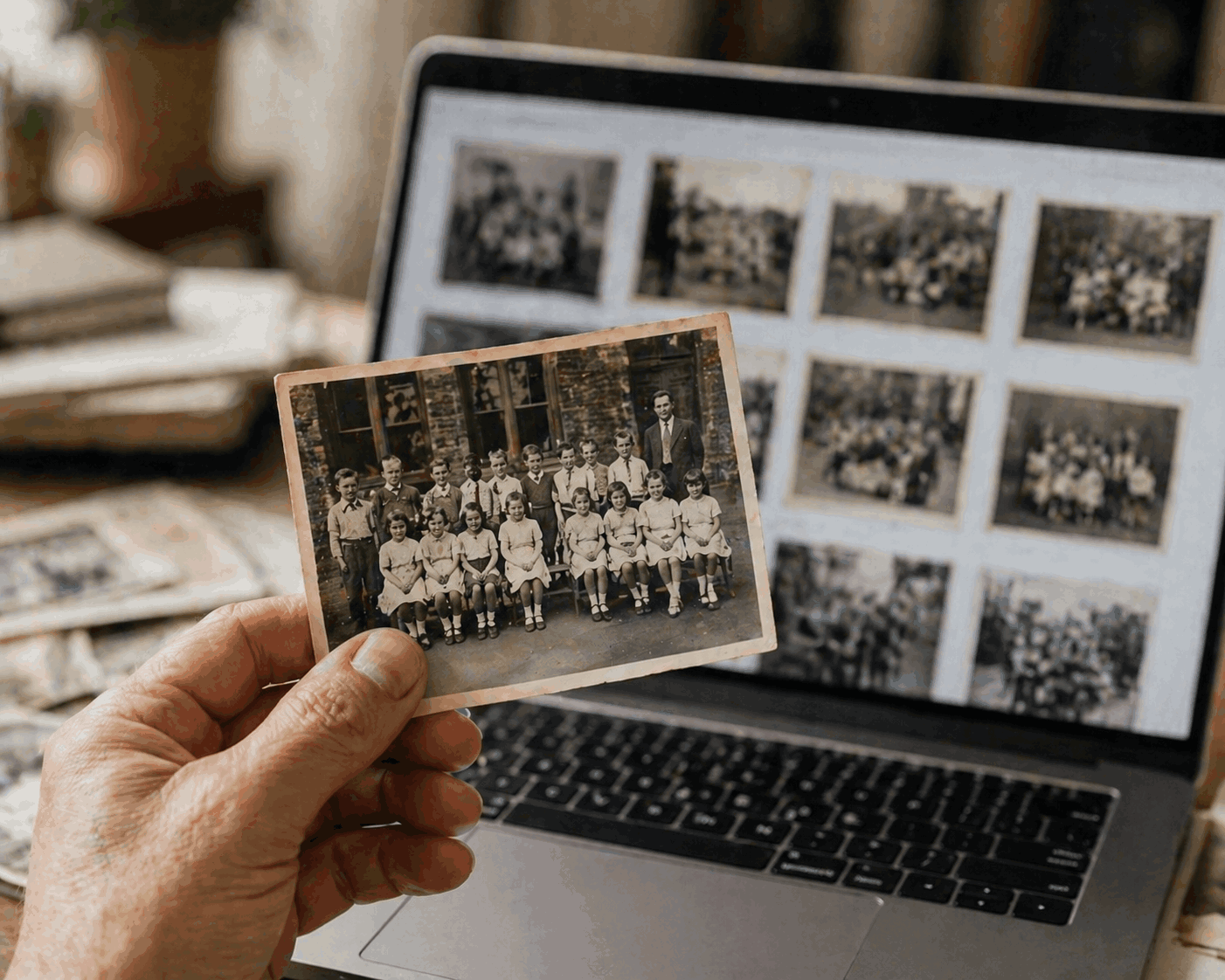
A digital archive can help extend the value of an identification activity beyond the reunion itself. Instead of relying exclusively on printed photographs, institutions can make selected collections available through an online gallery.
QR codes displayed alongside photographs at the event could direct alumni to the corresponding digital records, allowing them to explore additional images and submit information through the archive.
An institution might also invite attendees to continue browsing the collection after returning home.
This creates opportunities for alumni to revisit photographs, consult old yearbooks, contact former classmates and contribute information they were unable to recall during the event.
Importantly, the knowledge collected can be retained alongside the photographs themselves, reducing the need to transfer information from separate handwritten notes or spreadsheets.
A reunion can therefore become the starting point for a wider identification project rather than the only opportunity to participate.
From the reunion table to the archive
A physical identification station, bridged to a digital gallery
Identification station
Printed photos, organised by year or event, with numbered reference cards for names and memories
A QR code on each board links straight to the online gallery
Online gallery
Alumni keep exploring and contributing after the event, wherever they are
How to crowdsource photograph identification with alumni who cannot attend
Most alumni will never be in the room. They're overseas, unable to travel, or simply didn't see the invitation. If a reunion table is the only route into an identification project, the majority of the people who could help never get the chance.
Digital crowdsourcing offers institutions a way to involve these alumni regardless of their location.
By making selected photographic collections accessible online, schools and universities can invite former students to explore images and contribute information at a time that suits them.
Build identification projects into existing alumni communications
Institutions do not necessarily need to launch a separate campaign to encourage participation. Photograph identification can become part of existing alumni engagement activities.
A school might include an unidentified class photograph in its monthly alumni newsletter, inviting former pupils to help name the individuals pictured. A university could share photographs from a particular student society ahead of an anniversary event. An alumni relations team might feature a different decade each month, encouraging graduates to explore their own period of study and contribute their memories.
These activities provide a clear and manageable ongoing reason for alumni to engage with their institution's archive, rather than just at one event.
An alumnus who rarely attends reunions or responds to general alumni communications may nevertheless be interested in a photograph featuring their former classmates.
The opportunity to contribute personal knowledge gives them a specific and meaningful reason to participate.
Encourage alumni to contribute their own photographs
Institutional collections represent only part of the photographic record of school and university life. Former pupils and students may hold photographs that were never included in official archives.
These might show informal gatherings, residential life, school trips, student societies or everyday moments that institutional photographers did not capture.
An identification project can provide a natural opportunity to invite alumni to contribute these materials.
For example, a former student who recognises a photograph of a university sports team may have additional images of the same team in their personal collection.
With appropriate permissions and clear contribution guidelines, these materials can help institutions develop a richer and more representative record of their communities. The archive then becomes a collaborative collection shaped by the people who experienced the institution's history firsthand.
Many routes in, one growing archive
Alumni don't need to attend an event to contribute
Newsletter feature
An unidentified photo included in the monthly alumni newsletter
Anniversary spotlight
Society or team photos shared ahead of a reunion year
Decade of the month
A different era featured regularly to invite exploration
Alumni's own photos
Personal collections contributed directly to the archive
One growing digital archive
Every route leads back to the same searchable collection, open to alumni wherever they are
Choosing photo identification software for school and university archives
A small collection can be managed through printed copies, email replies and a shared spreadsheet for a while. As the number of photographs and contributors grows, that approach gets harder to sustain: the same person gets identified twice in separate emails, context ends up scattered across documents nobody else can find and matching it all back to the right photograph becomes its own job.
Digital photo identification software can help institutions manage this process more consistently. Here’s what to look for:
Searchable photographic collections
Alumni should be able to find relevant photographs without browsing an entire institutional archive. Search and filtering by date, event, person or collection can help direct contributors towards images they are most likely to recognise.
Simple identification and contribution tools
Contributors should have a straightforward way to identify individuals and provide contextual information. Institutions should also consider how submissions are reviewed, verified and incorporated into archival records.
Appropriate access controls
Not every school or university photograph will be suitable for unrestricted public access. Institutions need to consider privacy, safeguarding, copyright and the permissions associated with particular collections.
Facial recognition and photographic matching
Facial matching technology can help identify additional appearances of an individual across a collection, potentially reducing the need to review photographs manually. Institutions should assess its accuracy, privacy implications and suitability for their collections.
Integration with wider alumni engagement activities
Photograph identification can be more valuable when it connects with existing alumni communications, events and community engagement. Consider whether the software supports these activities or requires information to be transferred between separate systems.
Long-term preservation and data management
Identifications should remain accessible and useful after a particular reunion or project has ended. Institutions should consider how information is stored, updated, exported and retained as part of their wider archive management strategy.
Cost and staff capacity will also influence the decision.
A solution that requires substantial manual administration may be difficult to sustain, particularly where archive responsibilities are shared between a small team or volunteers.
Equally, institutions should consider the longer-term value of a platform that supports both the identification project and their wider alumni engagement objectives.
The aim should be to select an approach that makes it easier for alumni to contribute while allowing the institution to preserve and build upon the information collected.
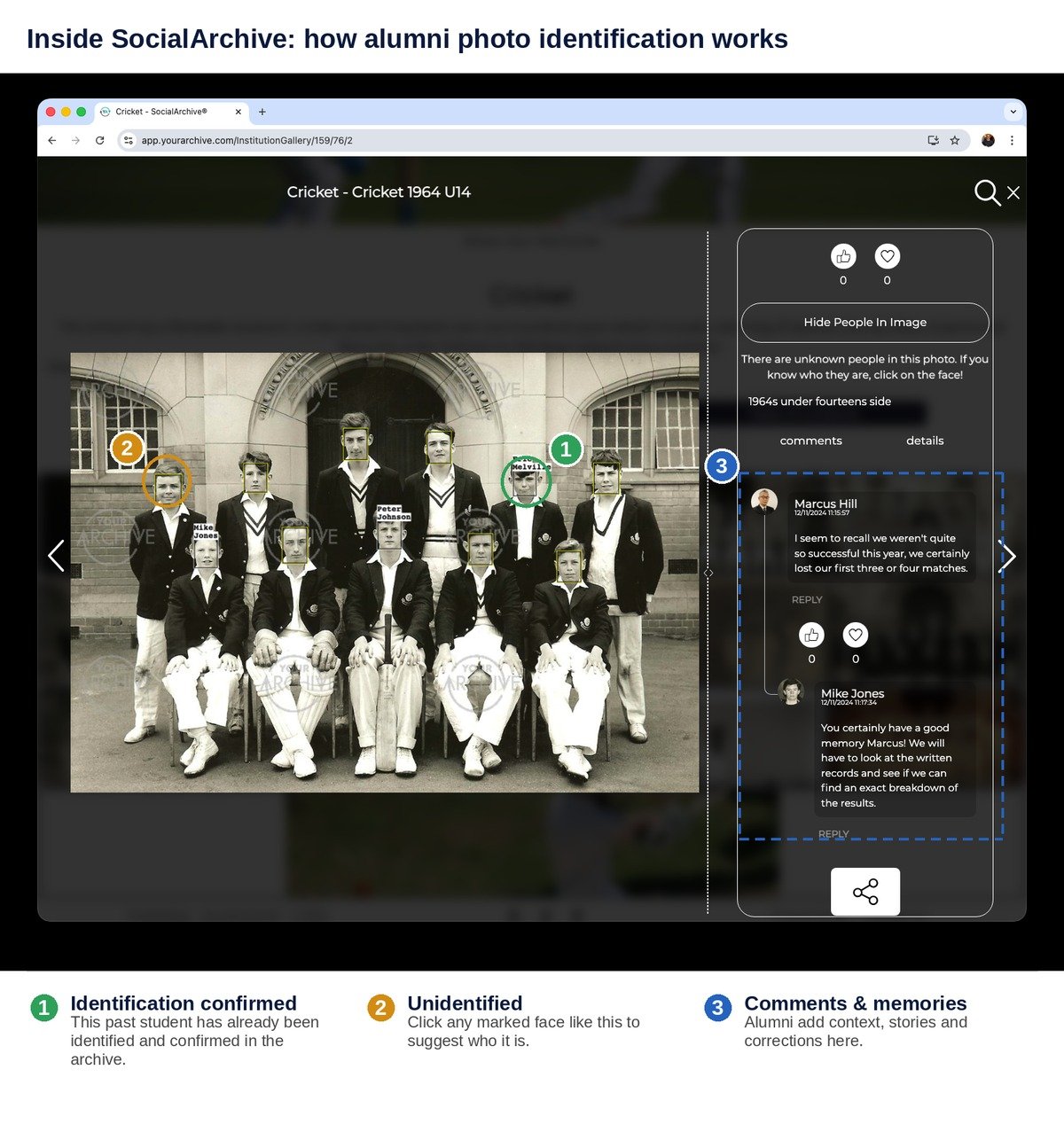
How facial recognition can help identify alumni across your photographic archive
One of the challenges of traditional photograph identification is that the same individual may appear in hundreds of images across an institutional collection. An alumnus might be identified in a class photograph but remain unnamed in the sports team photo, the school trip photo and the production photo from the same year, each one needing to be worked out separately.
Facial recognition technology offers a way round this. By analysing facial features and identifying potential matches across a collection, it can help locate other photographs of the same individual, including ones that have never been captioned or catalogued at all. An alumnus who identifies themselves in a single school photograph from 1988 might, through this process, discover a dozen more images from their time at school, some containing former classmates or teachers they can go on to identify too. Each contribution becomes a starting point for further discovery rather than a single, isolated fact.
SocialArchive builds this into its platform directly: once someone is identified in one photograph, facial matching surfaces their likely appearances elsewhere in the collection, and alumni can also use this to find photographs of themselves within the collections they have access to.
Facial recognition does, however, have limitations. Changes in appearance over time, image quality, lighting and the condition of historical photographs can all affect matching accuracy, so potential matches should be reviewed rather than treated as definitive proof of identity. Institutions also need to consider the data protection implications of processing biometric data, with appropriate lawful grounds, transparency, security and access arrangements established before introducing the technology.
Used responsibly, facial recognition complements the knowledge alumni and archivists already bring, helping institutions make connections across a collection that would otherwise take considerable manual effort.
Digital archives, real-world impact
The value of this work is easiest to see in what it produces. At Latymer Upper School, adopting SocialArchive turned photograph identification from a cataloguing task into something that reconnected the school with people it had lost touch with entirely.
One exchange started when an alumnus helped identify a forgotten teacher in an old photograph. That small interaction with archivist Polly grew into an ongoing conversation, and the alumnus, who hadn't returned to the school in more than 50 years, eventually accepted an invitation to attend Latymer's 400th anniversary celebration. As Polly put it, "He said he would never have come to it if we hadn't had those interactions behind the scenes first." That same alumnus has since become a legator to the school, a reminder of how much a small act of recognition can be worth, once it reconnects someone with the place that shaped them.
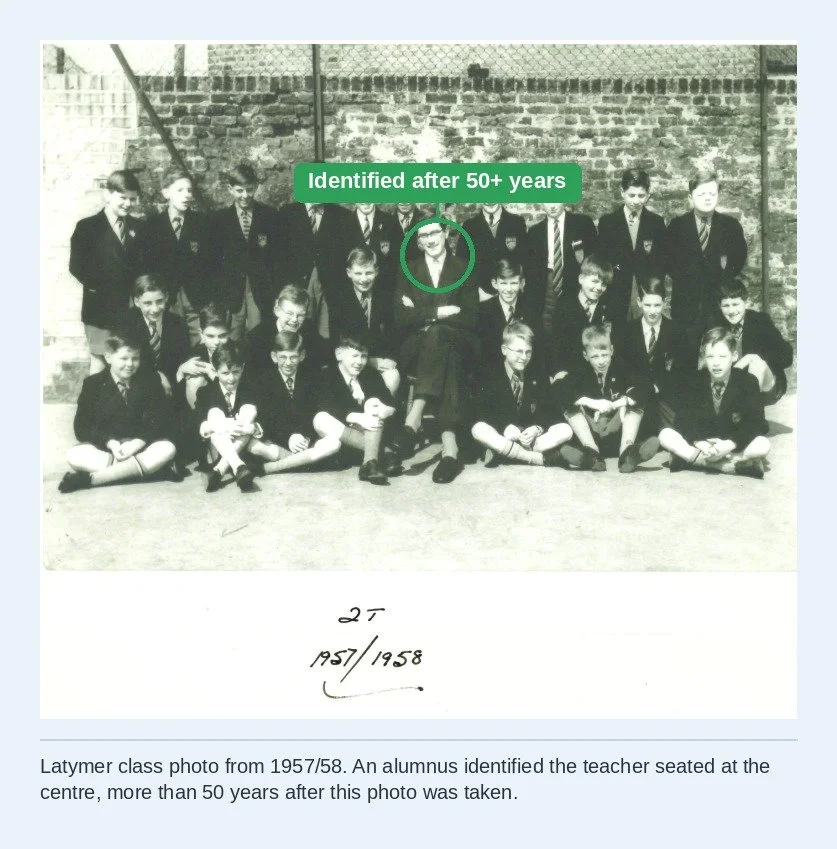
A second example shows what's at stake when identification goes beyond nostalgia. A family got in touch looking for a photograph of a Latymerian killed in the Second World War. Polly found an unlabelled 1944 prefects' photograph and a list of names with no faces attached and contacted a 1945 alumnus living locally who might remember him. He identified the boy immediately, front row, on the left, with total certainty despite the photograph being 78 years old at the time. The family later confirmed the identification using a photo from his wartime squadron.
Turning alumni knowledge into institutional history
Every photograph identified adds another piece of information to an institution's historical record. Every memory shared provides context that might otherwise be lost.
Reunions, digital crowdsourcing and facial matching each solve a different part of the same problem: reaching more alumni, in more places, with less manual effort. But none of it works without the thing only alumni can supply. A former pupil who identifies a teacher may rediscover photographs of their own classmates. A graduate who shares one memory may reconnect with a society they haven't thought about in decades. A photograph shown at a reunion can start a conversation that outlasts the event itself, as Latymer's own experience shows.
Technology can manage the process. The knowledge still must come from the people who lived it.
Somewhere within your alumni community, there may be someone who can identify every face in a photograph that's sat unlabelled for decades. They just haven't been asked yet.
Your alumni hold the names, memories and stories that can bring your photographic collections to life. SocialArchive gives schools and universities the tools to capture that knowledge. Get in touch or book a short demo to find out more.
FAQs
How do you identify people in old school or university photographs?
Schools and universities can identify people in old photographs by combining existing archive records with the knowledge of former pupils, students and staff. Alumni reunions, online photo galleries and targeted identification campaigns provide opportunities for people to recognise former classmates, teachers and events. Digital archive platforms such as SocialArchive can help institutions collect contributions, record identifications and use facial recognition to locate additional photographs of identified individuals.
Is there software that allows alumni to identify people in old school photographs?
Yes. Digital archive platforms such as SocialArchive allow schools, colleges and universities to share photographic collections with their alumni communities and invite contributions. SocialArchive combines searchable digital archives, user contribution tools and facial recognition technology to help institutions identify individuals, connect photographs and preserve information contributed by former students.
Can facial recognition identify former pupils and students in historical photographs?
Facial recognition can help locate potential appearances of the same individual across a photographic collection. Once a person has been identified, facial matching technology can help find additional photographs in which they may appear. However, facial recognition cannot reliably establish an unknown person's identity without supporting information. Historical image quality, changes in appearance and other factors can affect accuracy, so potential matches should be verified.
How can schools involve alumni who cannot attend reunions in photograph identification projects?
Schools and universities can use online photographic galleries, alumni newsletters, email campaigns and social media to invite contributions from former students who cannot attend in person. A digital archive allows alumni to explore relevant collections and submit information remotely, extending participation across different year groups and geographical locations. Institutions can also use targeted communications to reach alumni most likely to recognise particular photographs.
How can identifying old photographs improve alumni engagement?
Photograph identification gives alumni a meaningful opportunity to contribute to their institution's history. Recognising former classmates, sharing memories and discovering photographs from their school or university days can encourage alumni to reconnect with their institution and one another. Digital identification projects also provide opportunities for participation beyond traditional alumni events, allowing former students to engage with their institution's history regardless of their location.
Other articles that may be of interest: